Project goal and objectives:
Goal:
To increase the income, create employment opportunities and improve the quality of life of beekeepers through the production, processing, quality and marketing of honey products by the application of modern and advanced technology and Capacity Building.
Objectives:
- To increase and improve productivity by using various honey processing modern technologies in production and collection of honey.
- To increase consumer awareness about the beneficial aspects/qualities/processing of honey and honey products and contribute to increase the demand for honey and honey products.
- To increase the sale of safe honey by increasing the supply and marketing of pure honey.
- To increase sustainable beekeeping and crop production by increasing crop cultivation.
- To enhance capacity development of bee keepers.
Background of the project:
Agriculture and Beekeeping cannot be separated any way by virtue of their nature and activities. Beekeeping is directly and indirectly promoting this two sectors- Agriculture and Industry.
Since long, bees have been frequently utilized in many countries of the world to pollinate crop plants in order to increase the production of crops, seeds, fruits, vegetables and fibers through cross-pollination. Besides, bees are also being cultivated for the production of pollen, royal jelly, wax, pro polis and bee venom which have great importance in Medicinal and Industrial uses. Bee pollens are using as healthy food in many countries of the world. Since time immemorial beekeeping has been practiced haphazardly in Bangladesh. At early time this activity could be called as bee hunting not as beekeeping. It was done mainly for honey collection in crude method in the way of bee-hunting which is even found in the present time in some areas. Keeping or rearing bees in wooden hives probably started in the country at the time of self-reliant movement of Mahatma Gandhi in 1940. Before this, people used to keep bees in wooden logs, clay pots, bamboo and straw baskets etc. Their effort appears to be very limited. During this whole time bee-keepers-cum-catchers-cum-amateurs were trying to keep bees in hives. A few of them were partly successful but diseases with other problems again resulted in failure. In the 1960’s Bangladesh Small & Cottage Industries Corporation (BSCIC) started beekeeping in wooden hives at Jatrapur under Khulna district. The result at that time was not also satisfactory due to inappropriate technology and ultimately the activities were stopped in the same decade. In 1977 BSCIC again started beekeeping in modern and scientific way. Having successful efforts promotion and extension of beekeeping activities is being launched by BSCIC throughout the country since 1977. Now on realizing the importance and utility of honey, other bee products and beekeeping, some organizations started and assisted Standing Commission of Beekeeping for Rural Development modern beekeeping in the country. Among these, BASA Foundation has been working for the development of beekeeping sector for a long time.
Beekeeping and honey production is a promising economic sub-sector in Bangladesh. At present 3 issues are essential for the country i.e. 1. Increasing food production 2. Improving nutrition 3. Protecting the environment. Bees, beekeeping and honey production can contribute immensely to the socio-economic conditions of Bangladesh in all these three aspects.04 species of bees are found in Bangladesh namely Apis mellifera, Apis serena, Apis dorsata and Apis floria. Among these, bees of Apis mellifera and Apis serena species are used commercially for beekeeping.At present, 95 percent honey is produced from Apis mellifera species. On an average, about 1.77 million tons of honeys are produced every year in the United States. At present, Bangladesh produces about 10,000 metric tons of honey on an average per year, but the total demand for honey in the country is 30,000 metric tons. About 20% of the total honey produced in Bangladesh comes from the Sundarbans. Honey production or beekeeping is practiced in almost all districts of the country.
Naturally bees make honey from extracts of different flowers of Sundarbans, beekeepers collect this honey. The yield of mustard, litchi, black cumin, etc. increases by 30% to 45% due to crop cultivation. There is no need to use pesticides if we grow crop in a litchi garden. There are about 25,000 skilled and unskilled (trained) beekeepers in Bangladesh, out of which 2,500 beekeepers have adopted beekeeping as a profession.
Honey has the potential to be exported mainly to the Middle East. Among the various limitations of honey production in Bangladesh, processing or production of pure honey is a very important issue. Apart from this lack of awareness among the consumers, adequate information and knowledge on the use and preservation of honey, lack of knowledge about the scientific cultivation of honey.
Major Activities:
- Project Inception workshop
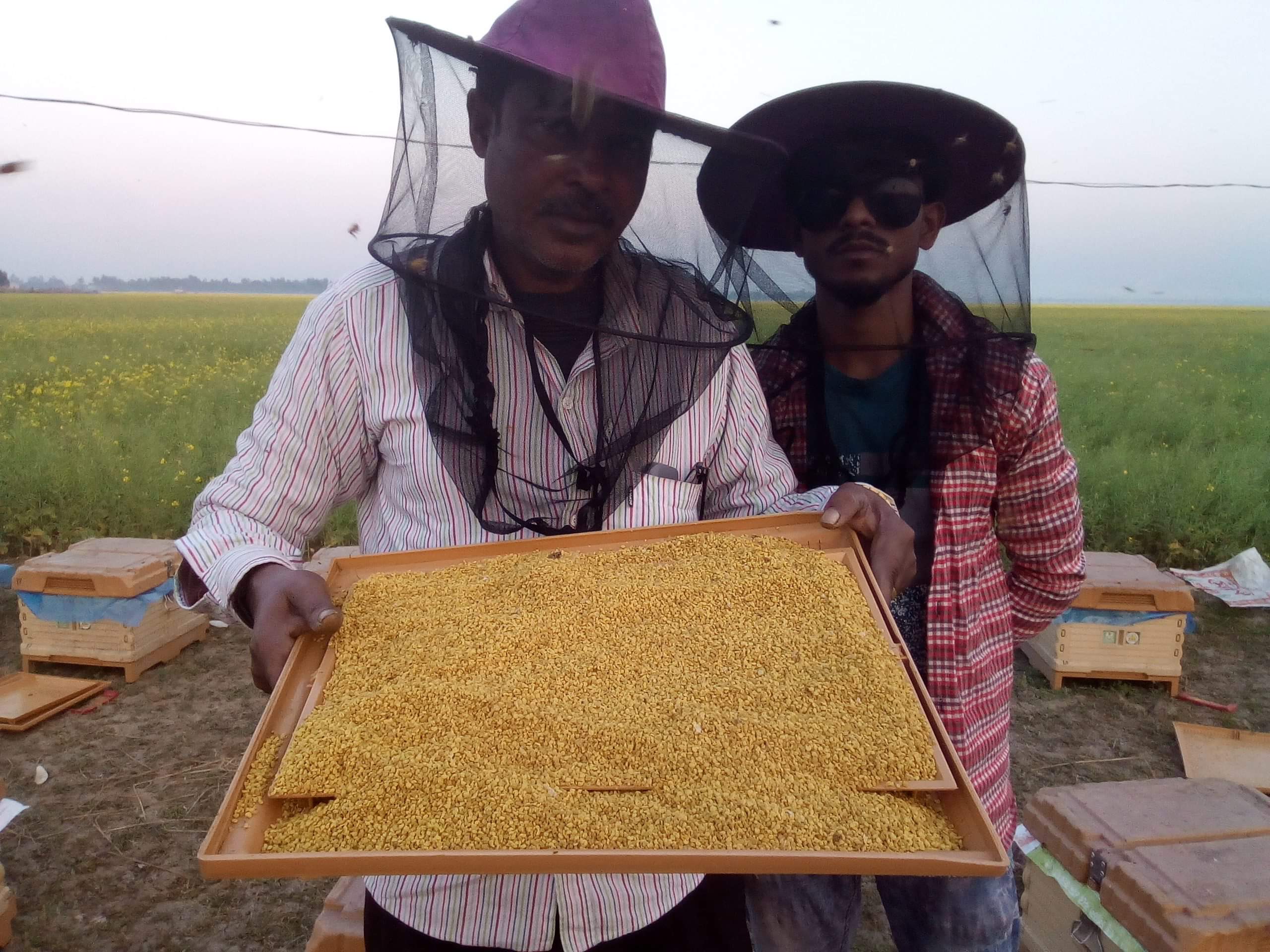
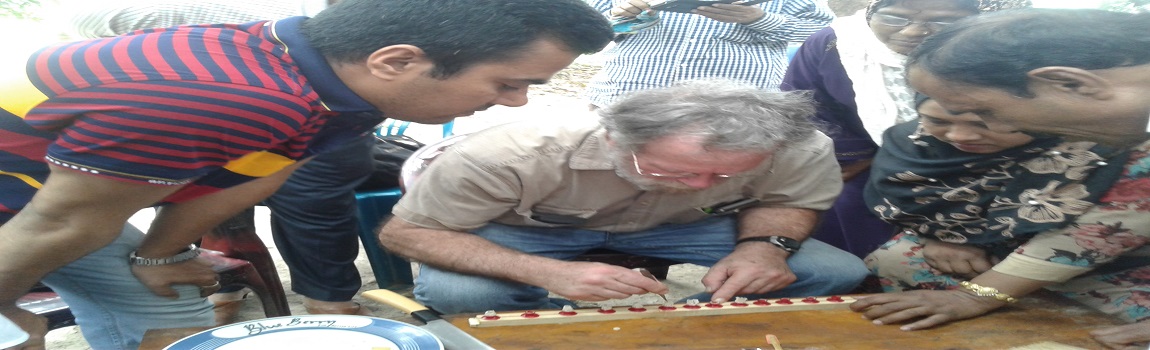
- Conduct 2 days training for 24 new Beekeeper groups (600 Beekeepers) on safe honey production, processing & marketing
- Conduct 1 day training for 08 Beekeepers group (200 Beekeepers) on safe honey production, processing & marketing
- Demonstration of artificial Bee food preparation in 32 Beekeepers group training for dearth period management and distribution among 800 beekeepers
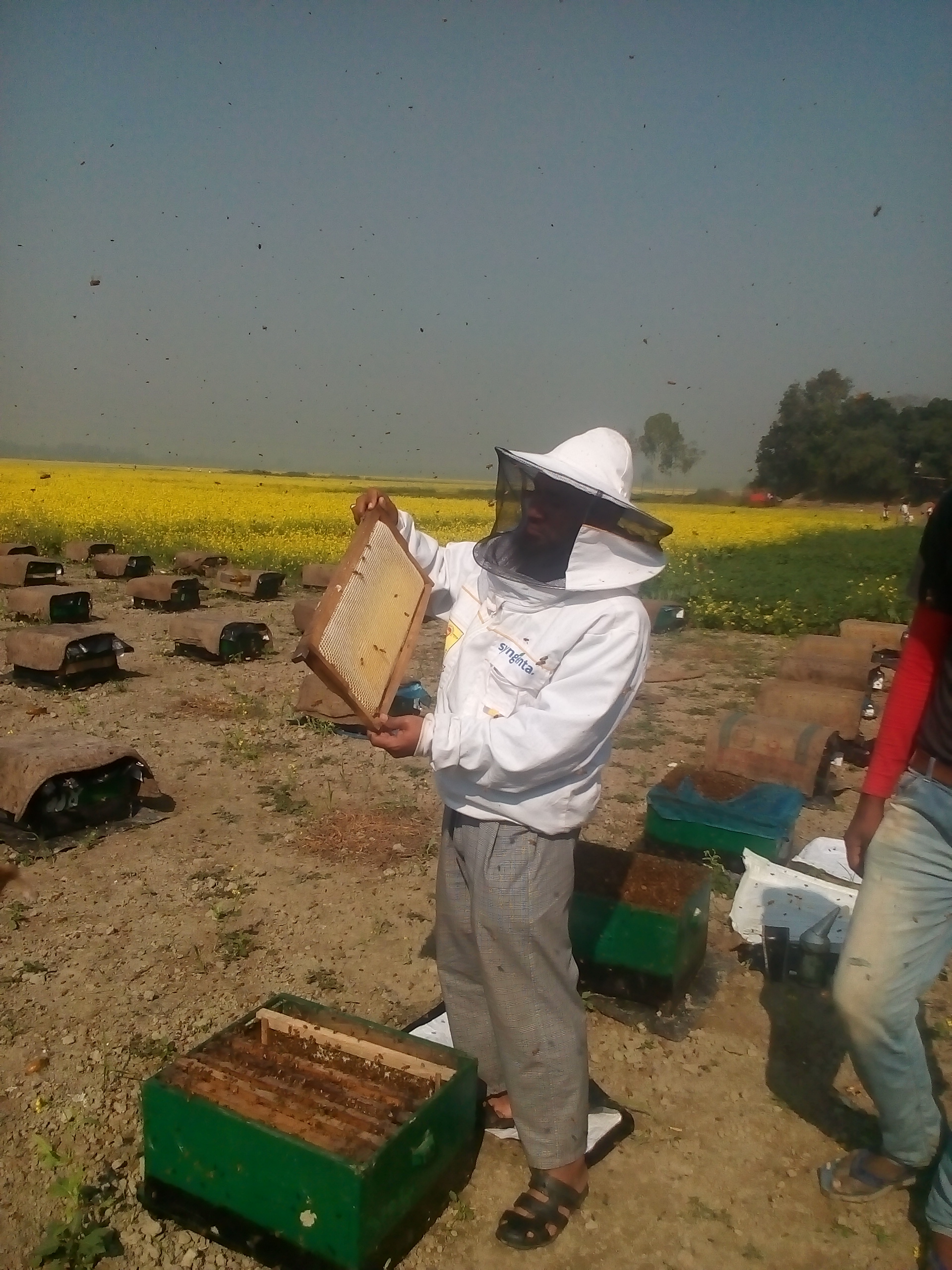
- Beekeeping equipment distribution for new Beekeepers of hilly areas (Bee box, Stand, Smoker, Gloves, Bee veil, Swarm bag, Bee brush, Queen gate, Queen cage etc.)
- Beekeeping equipment distribution for new Beekeepers of plain areas (Bee box with bee, Smoker, Gloves, Bee veil, Bee brush, Queen cage etc.)
- Distributing 10 honey processing machines to the existing 10 entrepreneurs in plain and hilly areas
- Distributing 10 comb foundation sheet machines to the existing 10 entrepreneurs in plain and hilly areas.
- Distribution honey extractor machines to Beekeepers
- Distribution of food grade containers for honey storage to the 800 beekeepers
- Financial support for packaging materials of honey branding to 20 Entrepreneurs (Beekeepers)
- Conduct district wise workshops to increase the promotion of honey
- Create video teasers of 20 entrepreneurs' products
- Financial assistance for Facebook Boosting to promote 20 entrepreneur's products
- Financial assistance for display the 20 entrepreneur’s product
- Exposure visit of 40 Beekeepers
- Video documentation on Beekeeping sector.
-
Donar Name:
Palli Karma Shahayak Foundation (PKSF) under Promoting Agricultural Commercialization and Enterprises (PACE) Project.
-
Date:
August 2016-July 2019 ( 3 Years)
-
Category:
Apiculture(Beekeeping)
-
Location:
a) Tangail : Mirzapur, Shakhipur, Gopalpur, Bhuapur, Ghatail, Madhupur. b) Gazipur : Gazipur Sadar, Sreepur, Kaliganj and Kapasia. c) Sirajganj : Ullapara. d) Khulna : Kaira. e) Narayanganj : Sonargaon.