Project objectives:
- Promote environment-friendly beekeeping practices to enhance sustainability and adapt to changing ecological conditions.
- Increase rural income through honey production, processing, and marketing while ensuring fair market access for beekeepers.
- Support biodiversity conservation by integrating beekeeping with agroforestry, tree plantation, and habitat restoration.
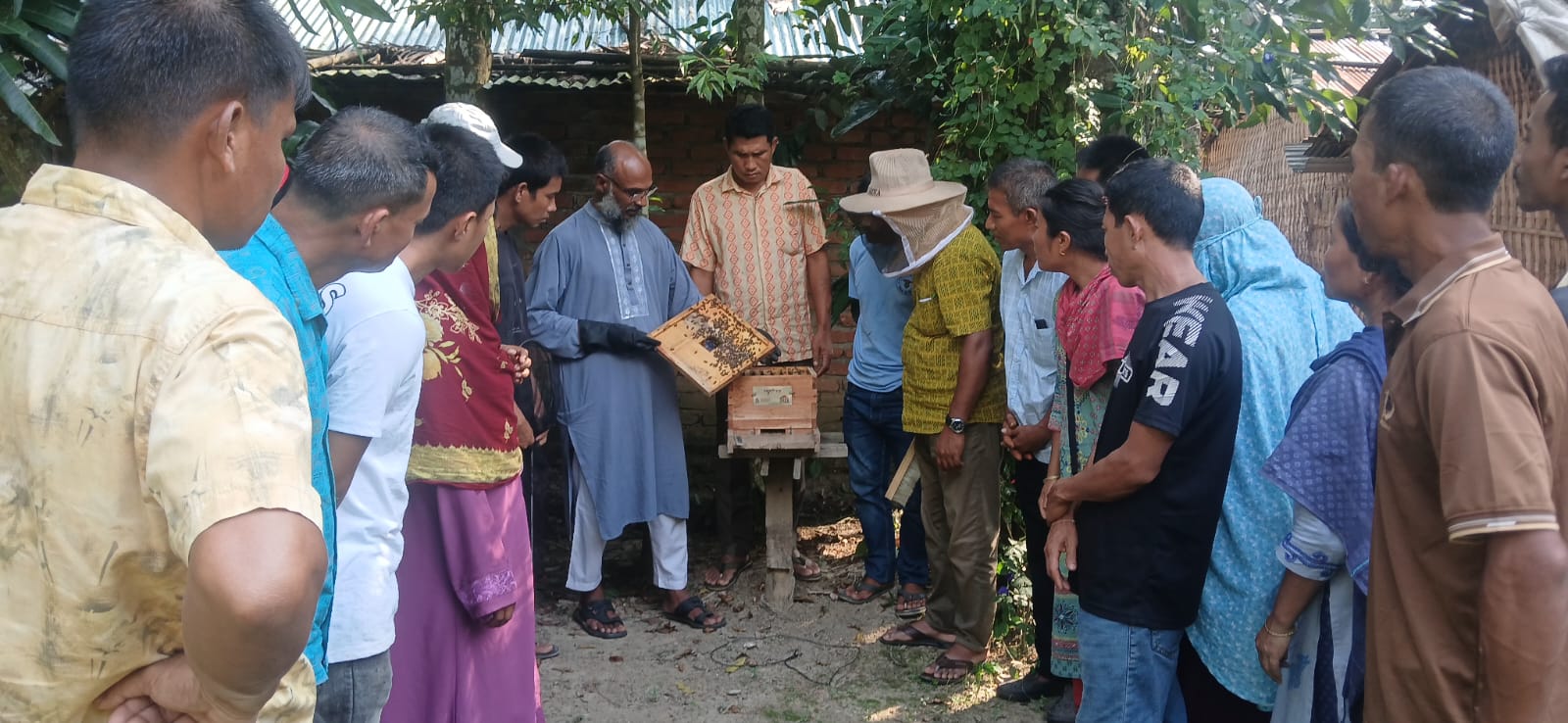
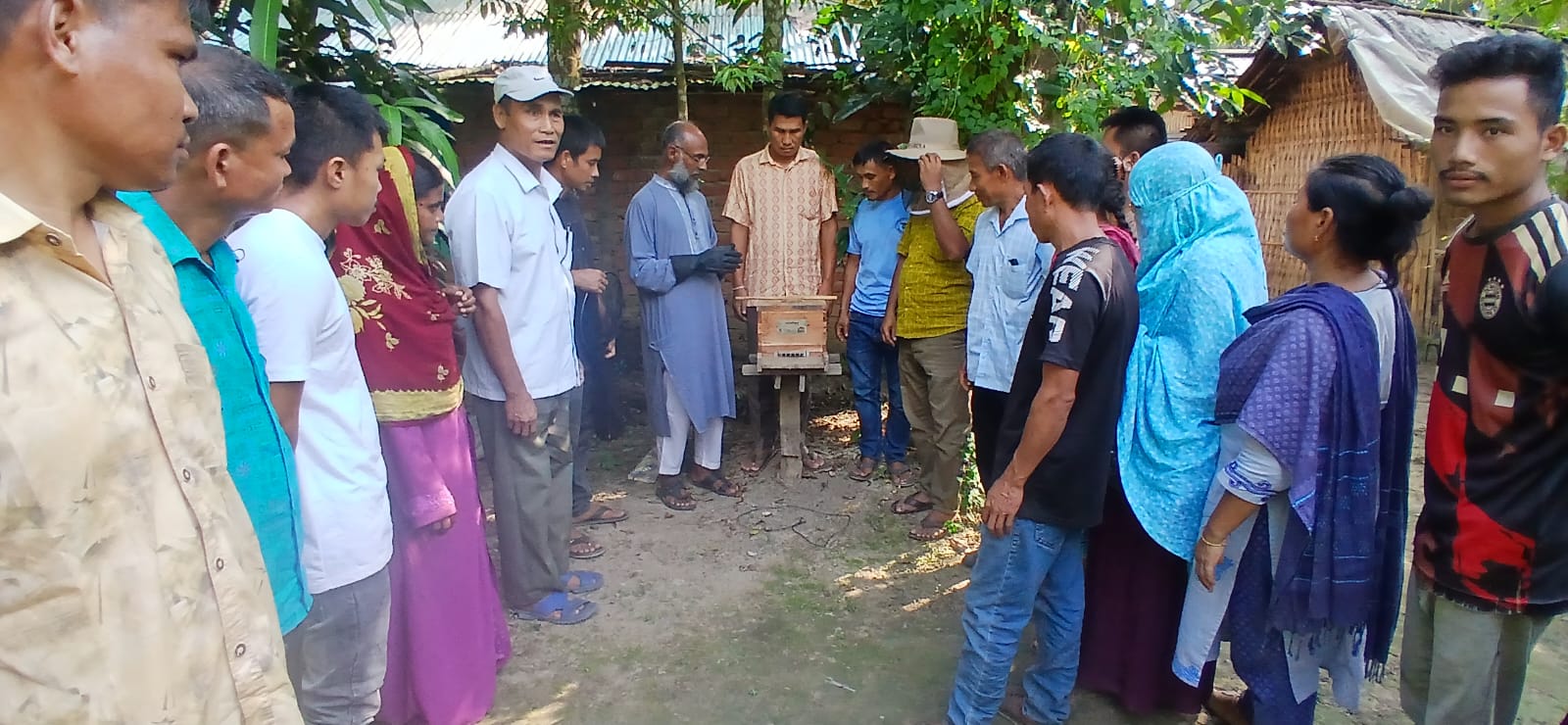
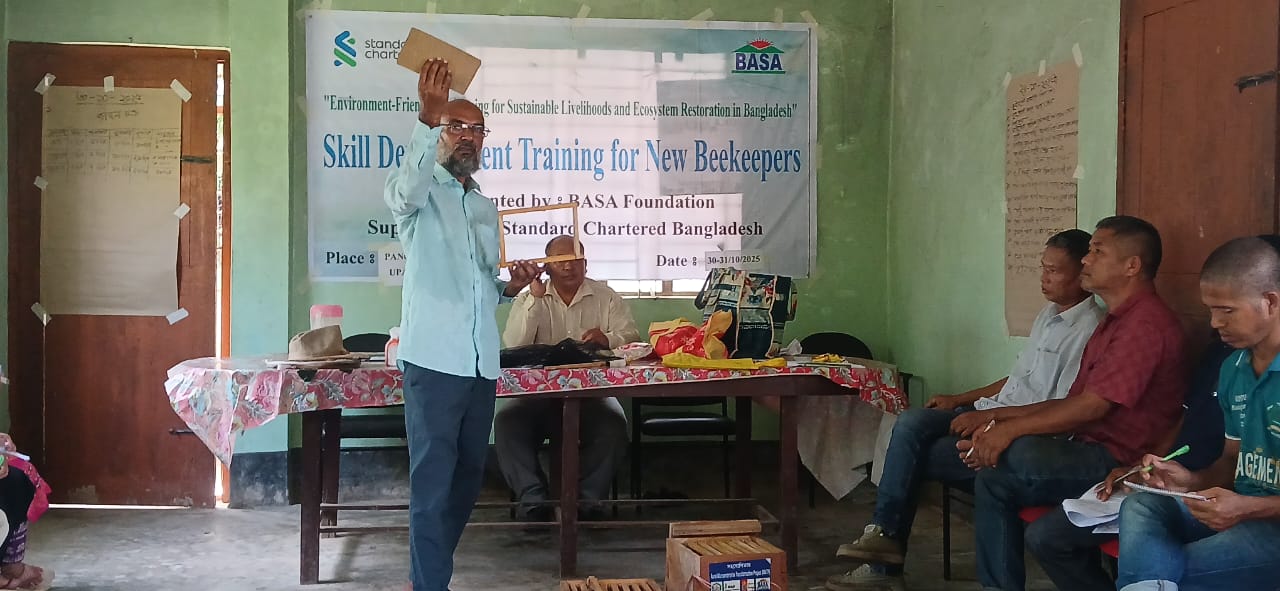
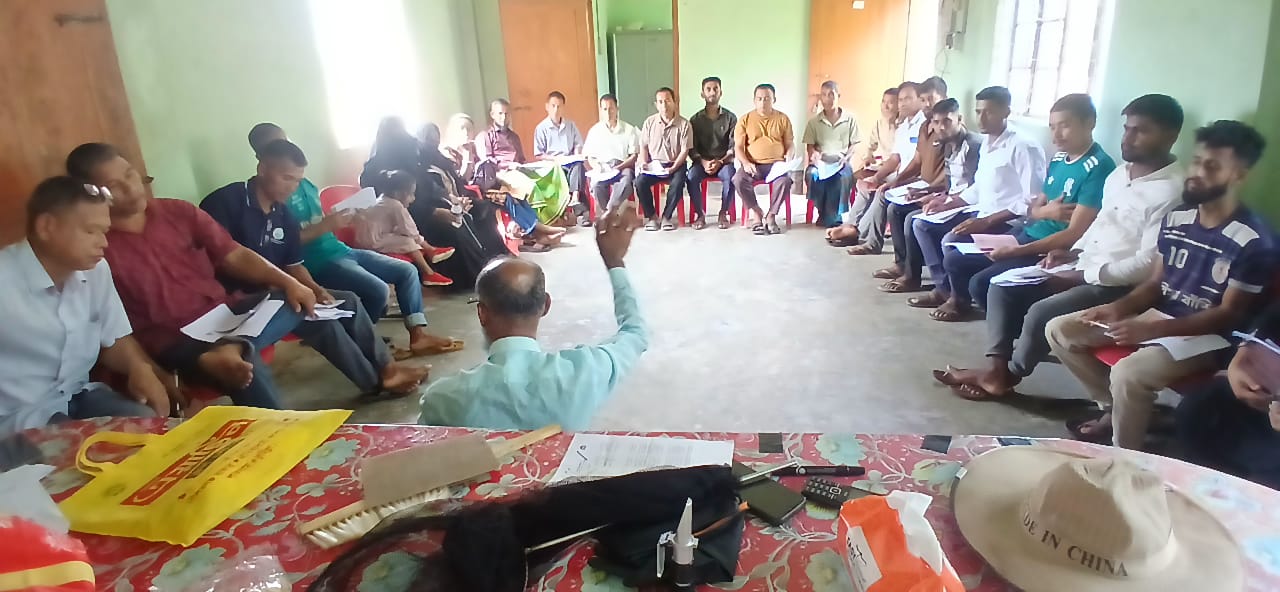
- Develop capacity among beekeepers and honey crop producers by providing training on sustainable beekeeping techniques, artificial bee food preparation, and Integrated Pest Management (IPM).
- Strengthen the honey value chain by offering support in processing, packaging, certification, and market linkages to improve product quality and competitiveness.
- Establish and strengthen Beekeepers’ Associations, particularly in the hill districts, to promote knowledge-sharing, collective bargaining, and sustainable industry growth.
Background of the project:
Apiculture, or beekeeping, is deeply intertwined with Bangladesh's agricultural practices and the cultural heritage of its rural communities. Beyond the production of honey and other valuable bee products such as royal jelly, pollen, bee venom, propolis, and wax, apiculture offers significant ecological and economic benefits. Honeybees play a crucial role in cross-pollination, enhancing the yield and quality of various crops, seeds, fruits, vegetables, and fibers. This natural pollination service not only boosts agricultural productivity but also contributes to the conservation of biodiversity by supporting the propagation of numerous plant species.[1]
In Bangladesh, where poverty and unemployment are prevalent, beekeeping presents a viable avenue for income generation, especially for small and marginal farmers, landless laborers, and vulnerable segments of society. The practice requires minimal land and capital investment, making it accessible to those at or below the subsistence level. Moreover, honey is a nutritious food that enhances human health and provides a source of cash income. The demand for honey and other bee products is substantial both domestically and internationally. Additionally, by improving crop pollination, beekeeping strengthens food security initiatives in Bangladesh.[2]
Given the country's diverse floral resources, beekeeping is feasible in many of Bangladesh's 85,000 villages. Implementing appropriate technologies can yield significant benefits, including increased honey production and enhanced agricultural outputs. Recognizing these advantages, the BASA Foundation has been promoting modern and scientific beekeeping since 2006, aiming to provide a subsidiary income source for rural poor, landless, and marginal beekeepers, both male and female. To date, BASA has trained approximately 5,000 beekeepers in collaboration with organizations such as the European Commission, GTT, IFAD, and PKSF.[3]
Building on this foundation, BASA's current strategic plan focuses on promoting sustainable beekeeping management. The proposed project aims to identify and support individuals without existing income-generating activities, providing them with beekeeping awareness and training, necessary logistical support, and ongoing technical assistance. By introducing advanced technologies and support mechanisms, the project seeks to increase safe honey production and boost the incomes of rural beekeepers.
The initiative will be implemented in key beekeeping regions, including Tangail, Gazipur, Pabna, Natore, Sirajganj, and the hill districts of Rangamati, Bandarban, and Khagrachari. Additionally, the project will extend to other high-potential areas such as Chapainababgonj, and Rajshahi ensuring a broader impact on honey production and livelihood improvement.
In summary, the project endeavors to leverage apiculture as a tool for sustainable agricultural development, environmental conservation, and socio-economic upliftment of rural communities in Bangladesh.
Major Activities:
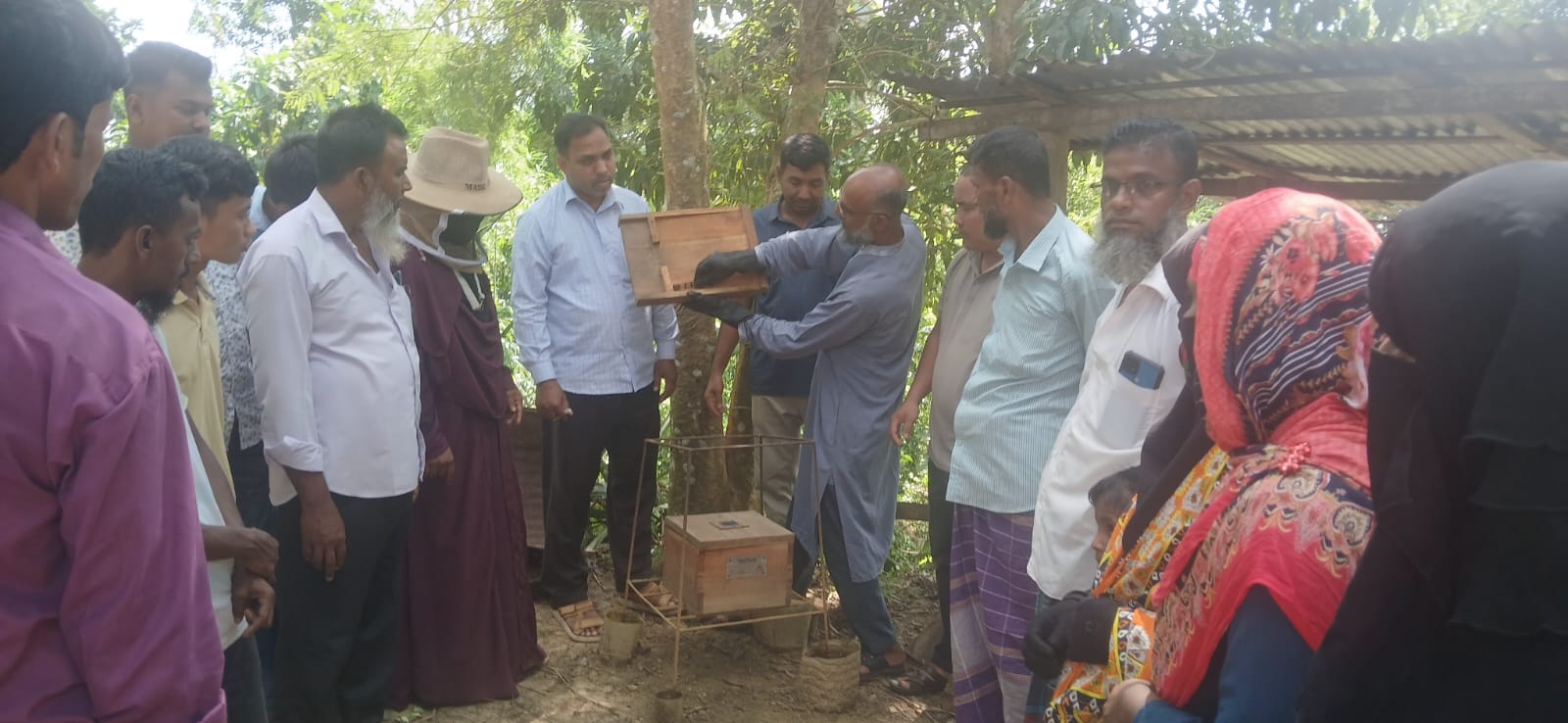
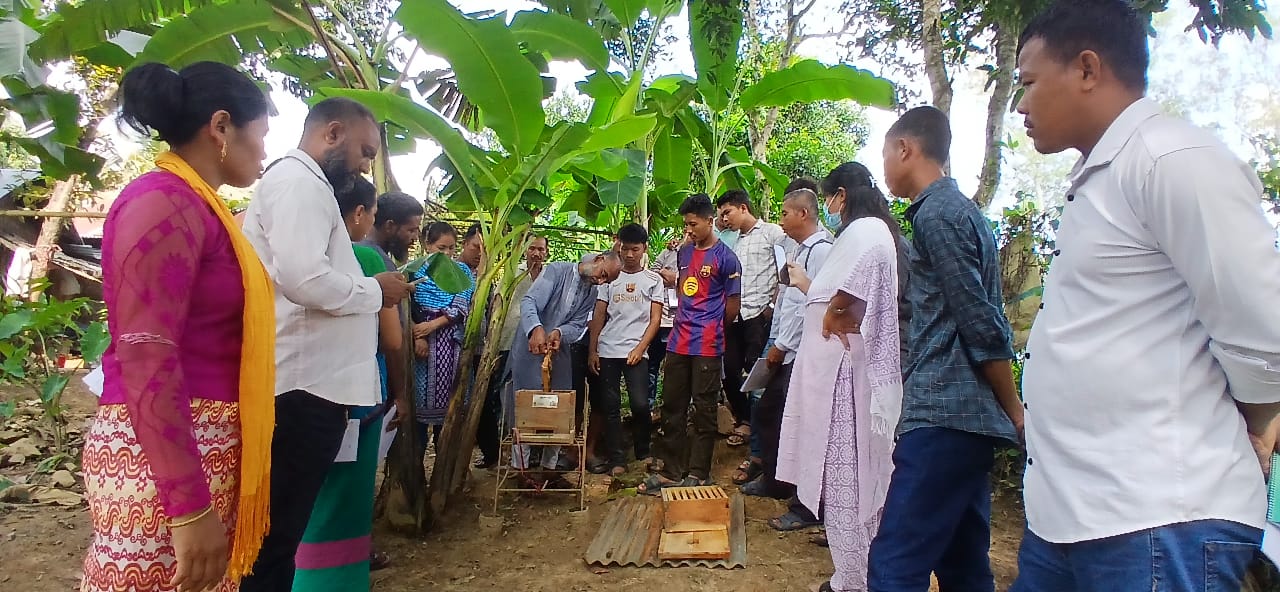
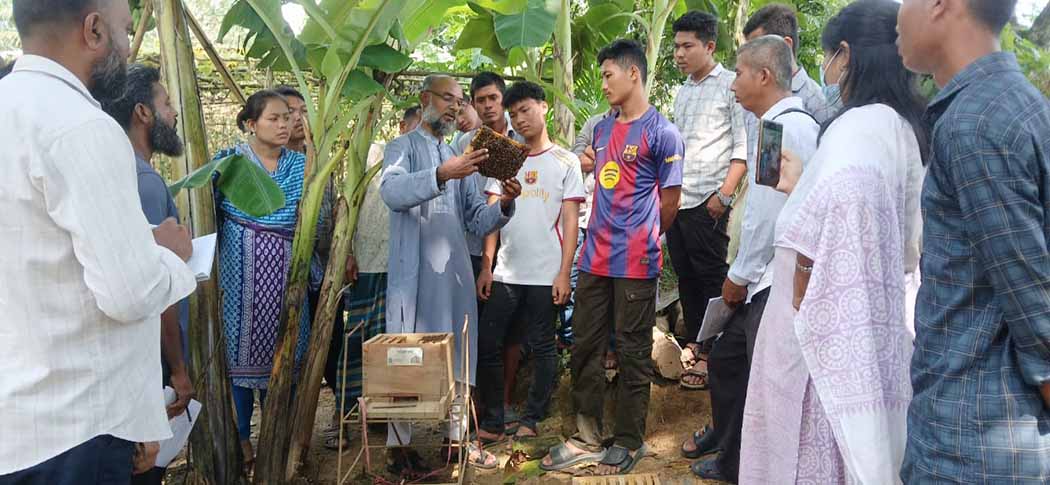
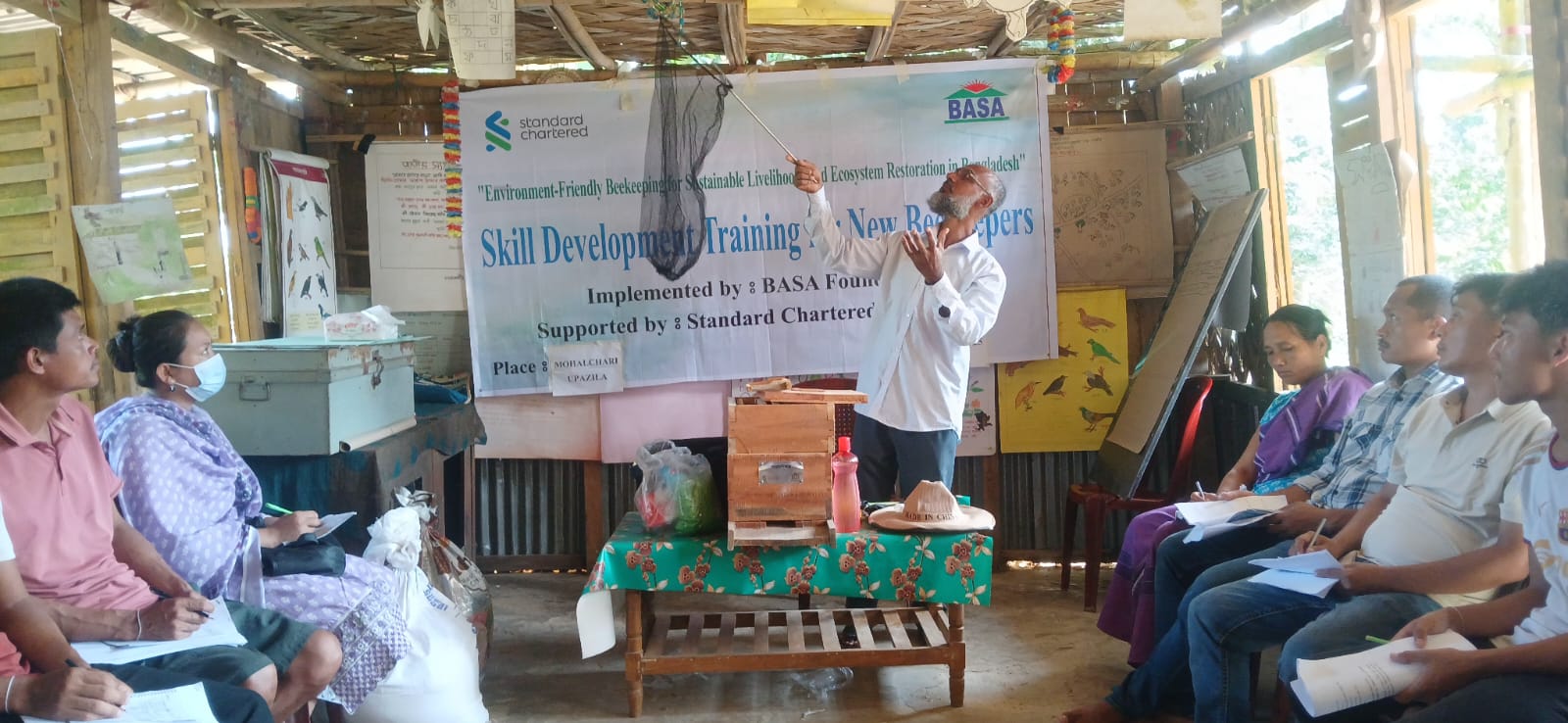
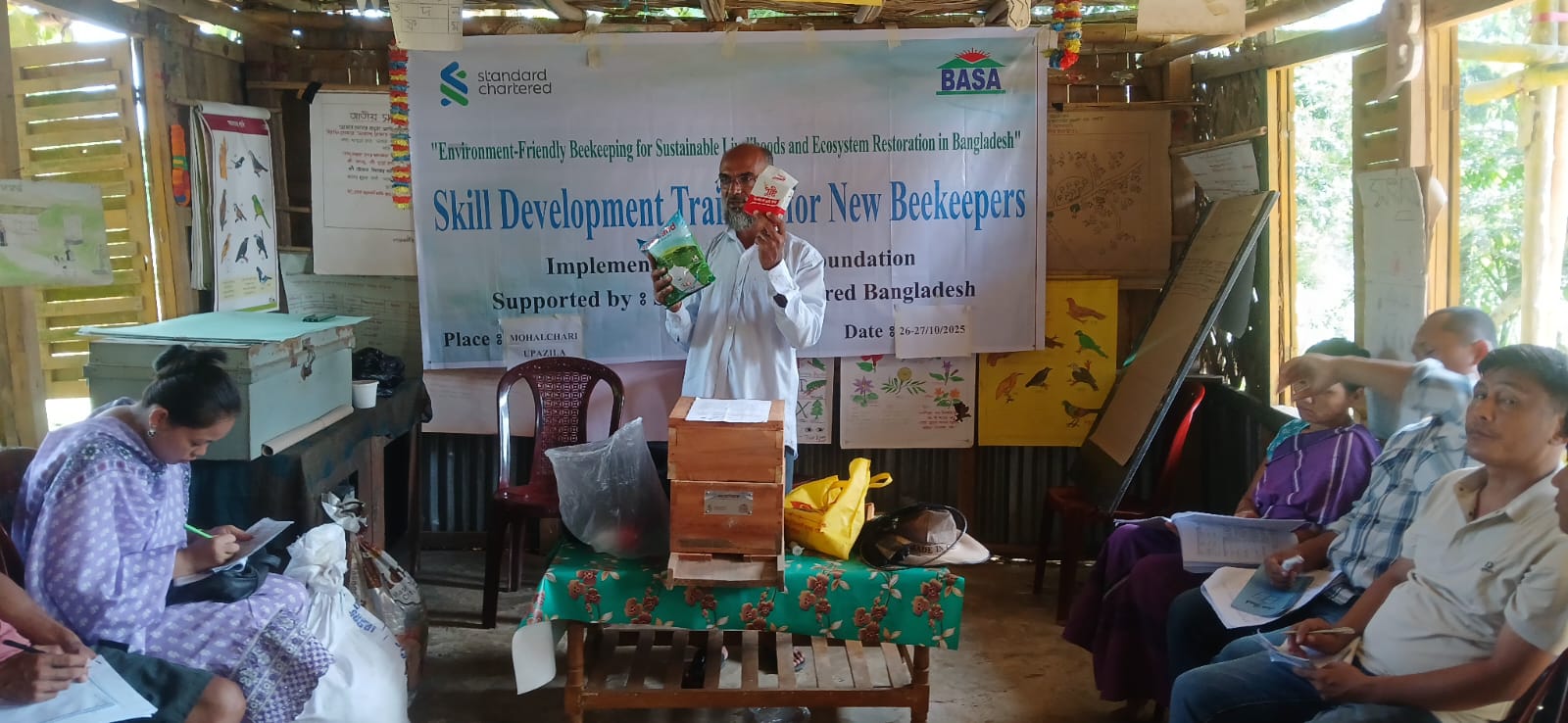
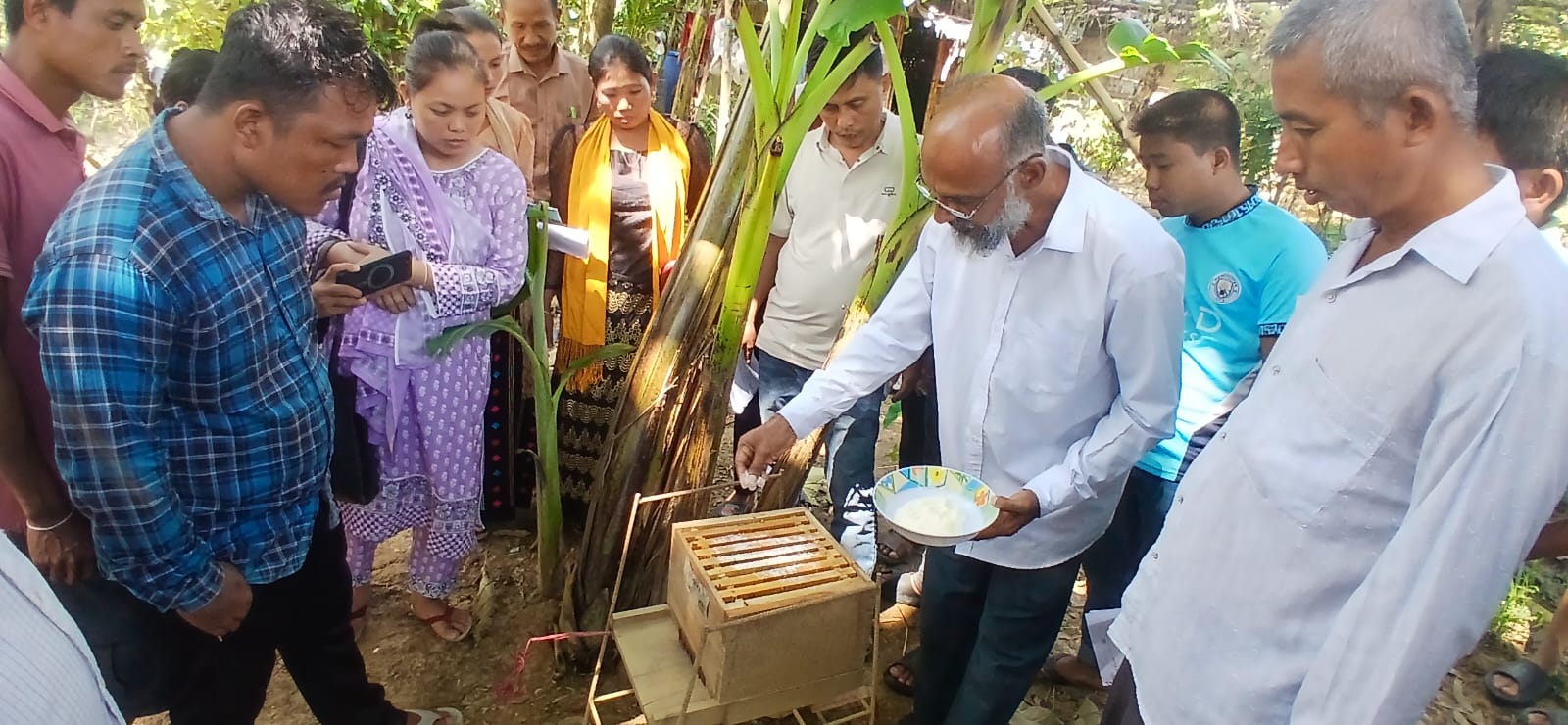
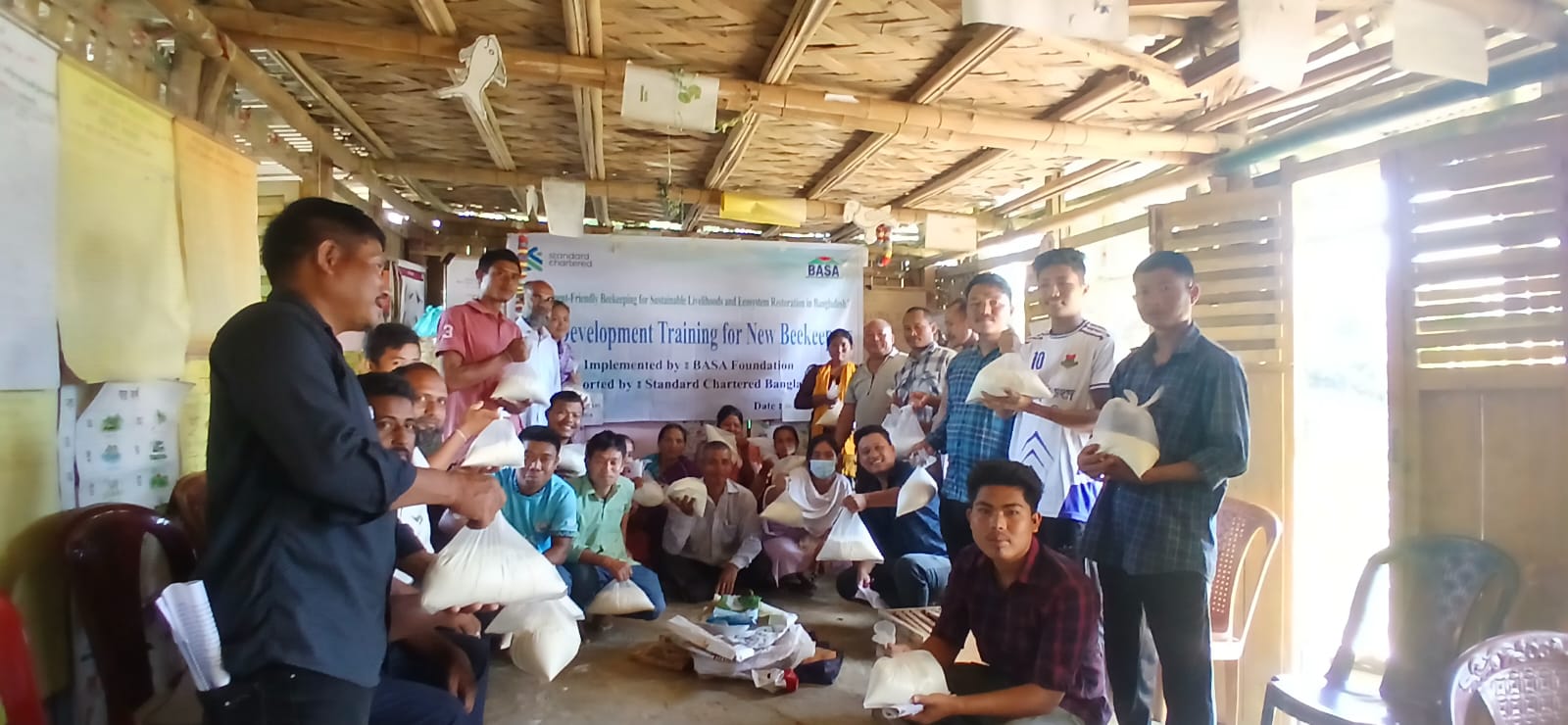
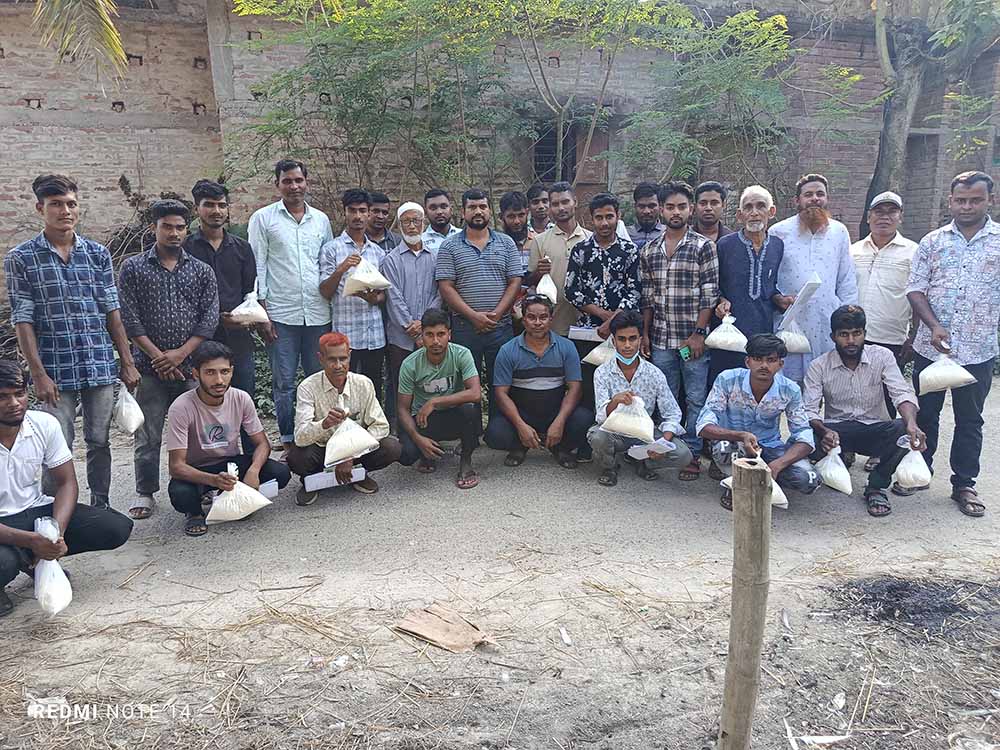
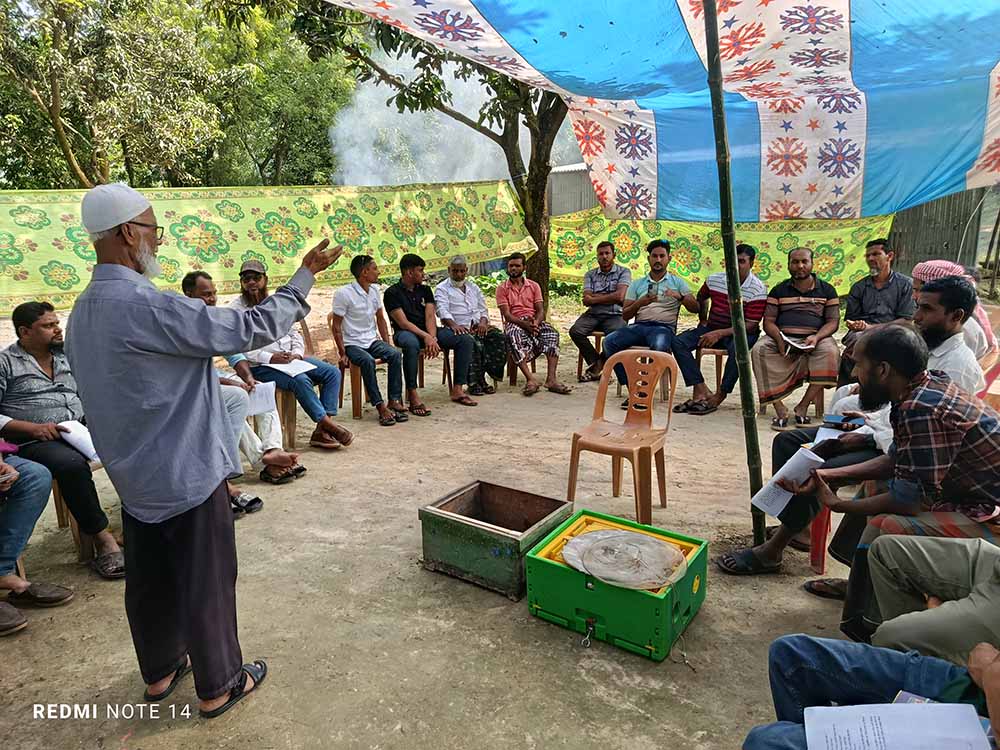
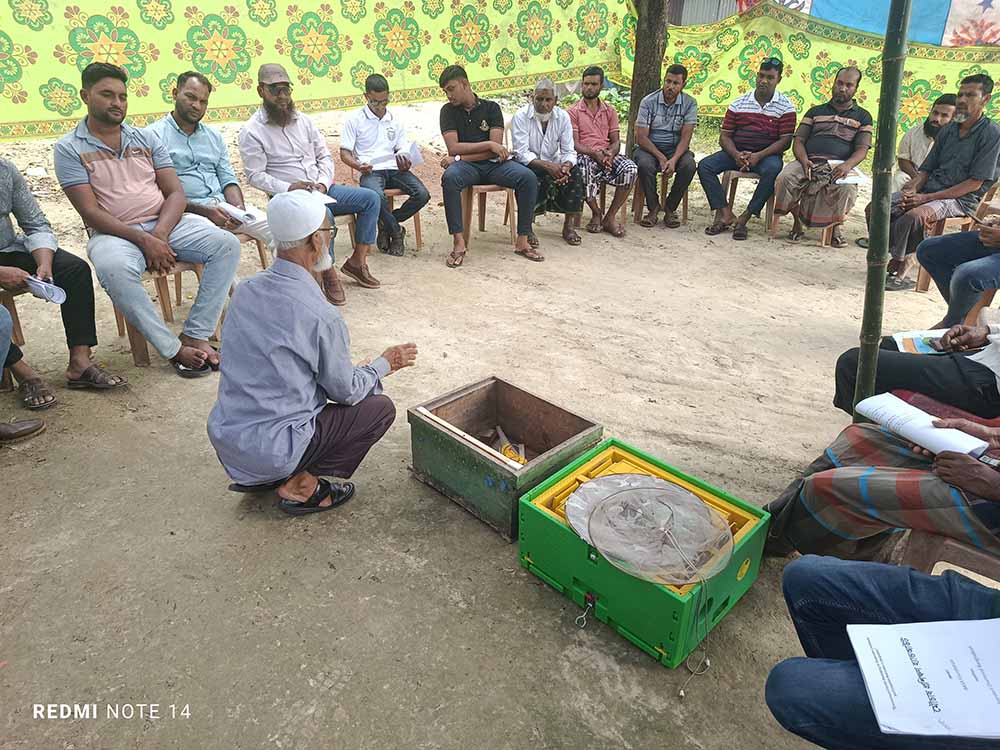
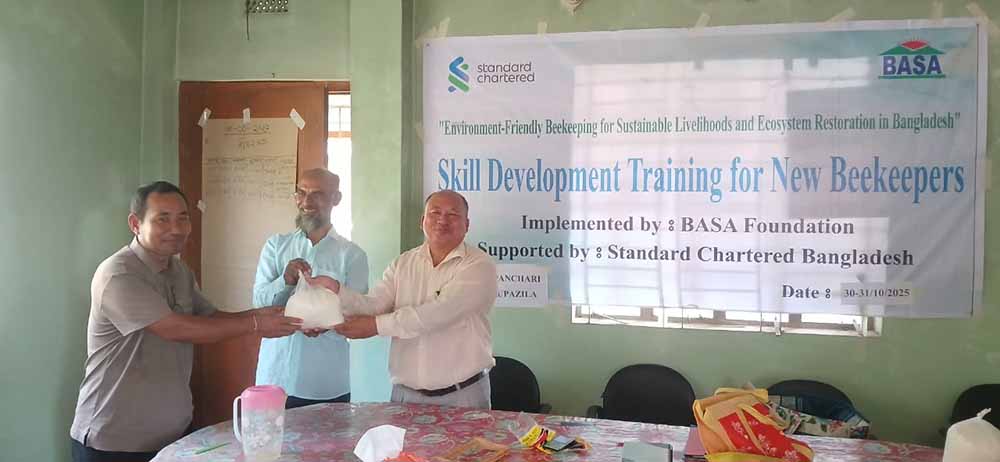
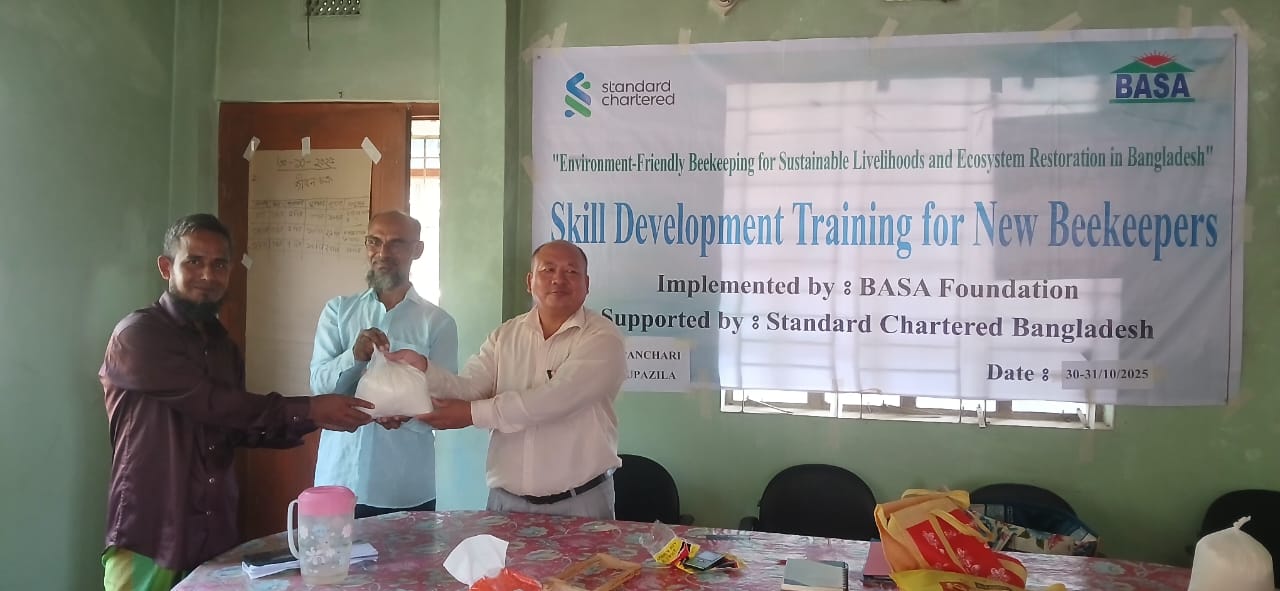
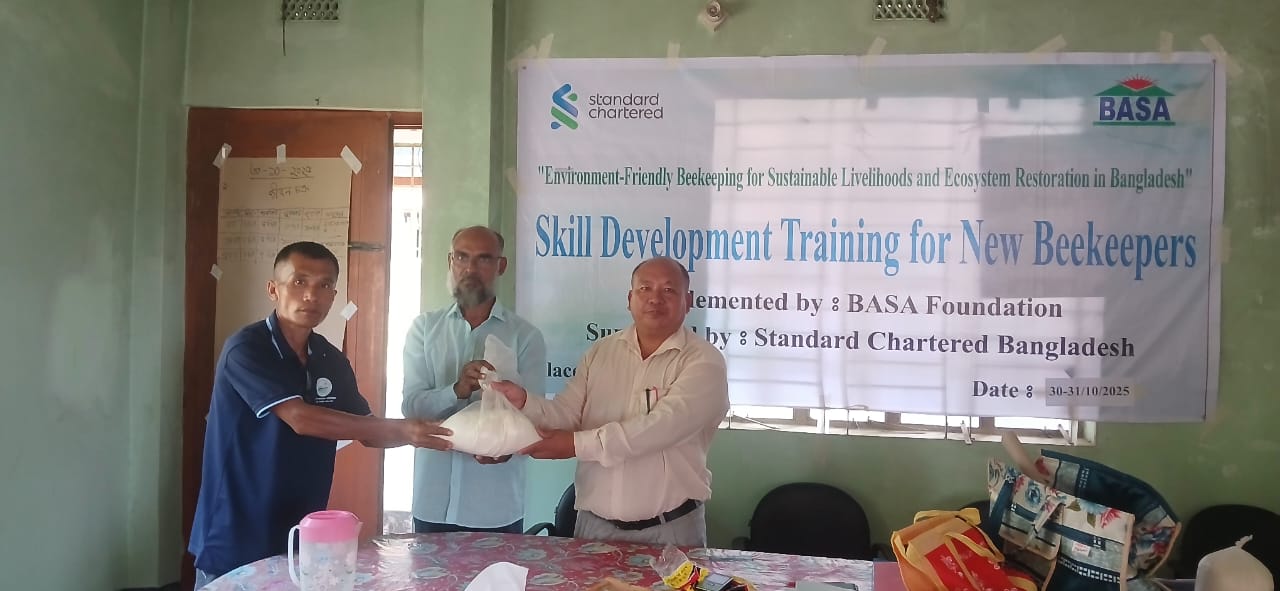
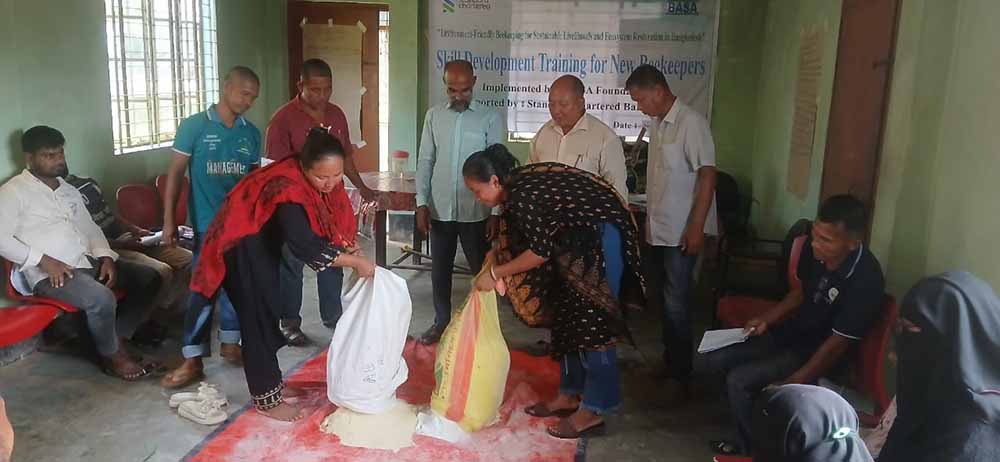
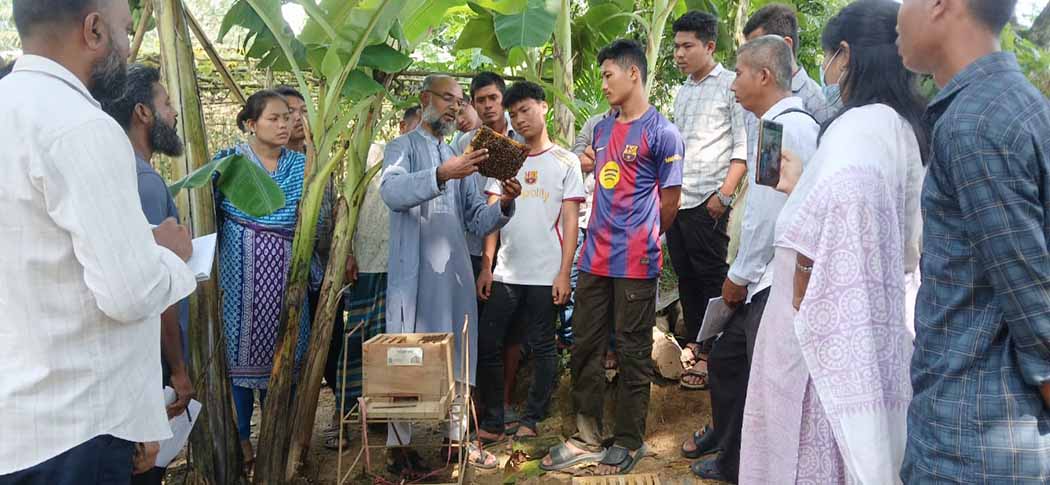
- Beekeepers training (575 new Beekeepers, 2 days) on safe honey production, processing, marketing & environment
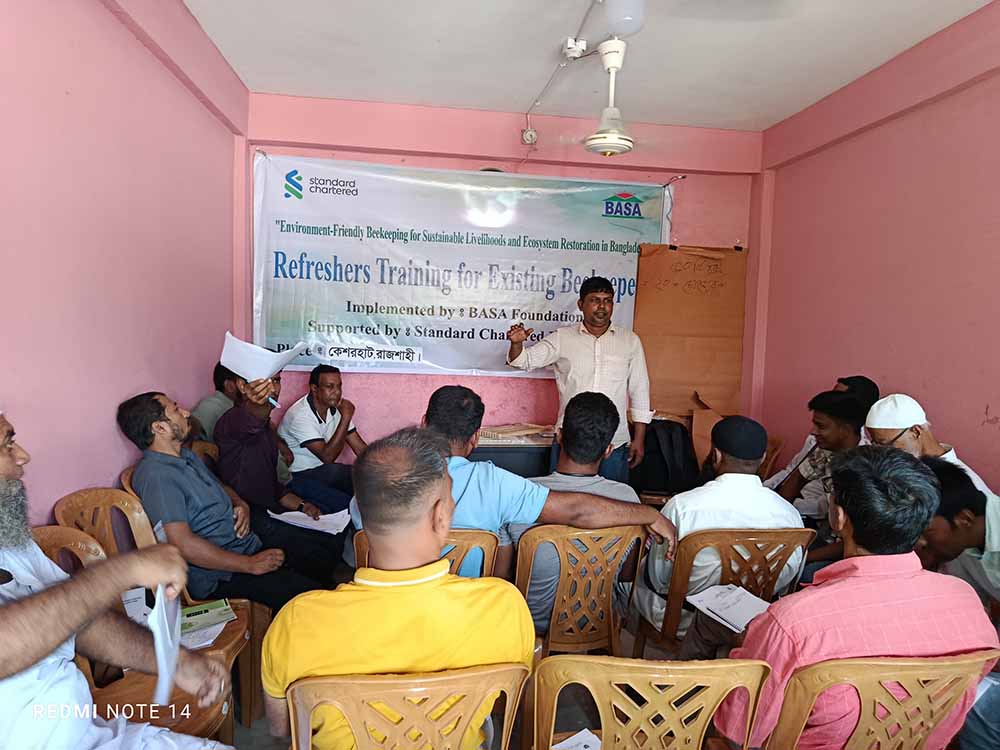
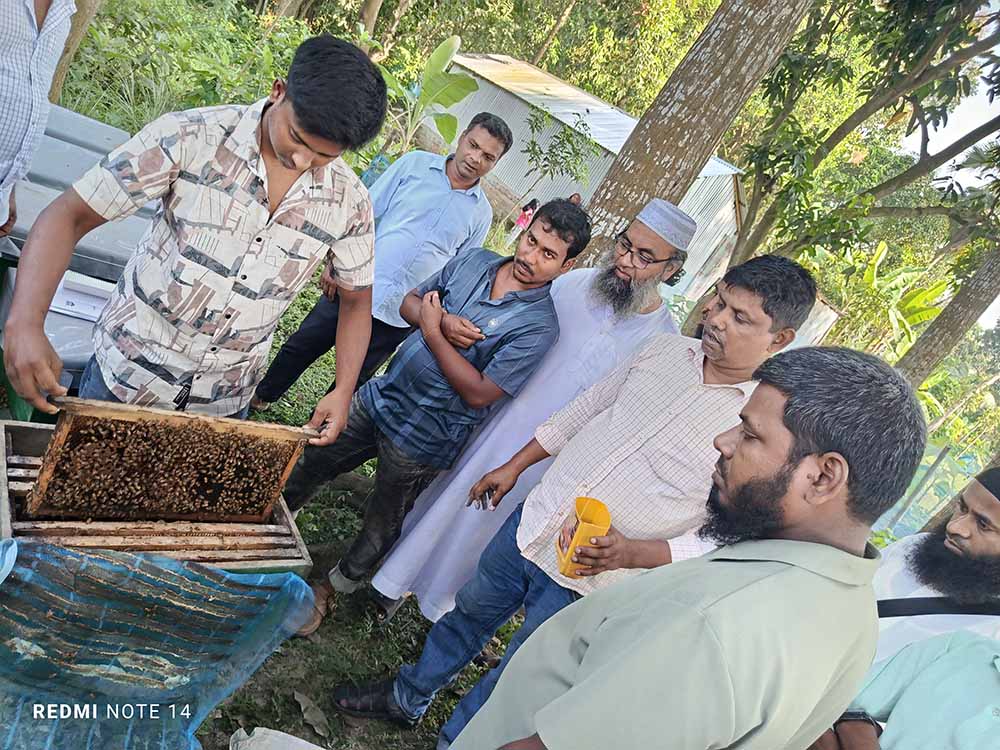
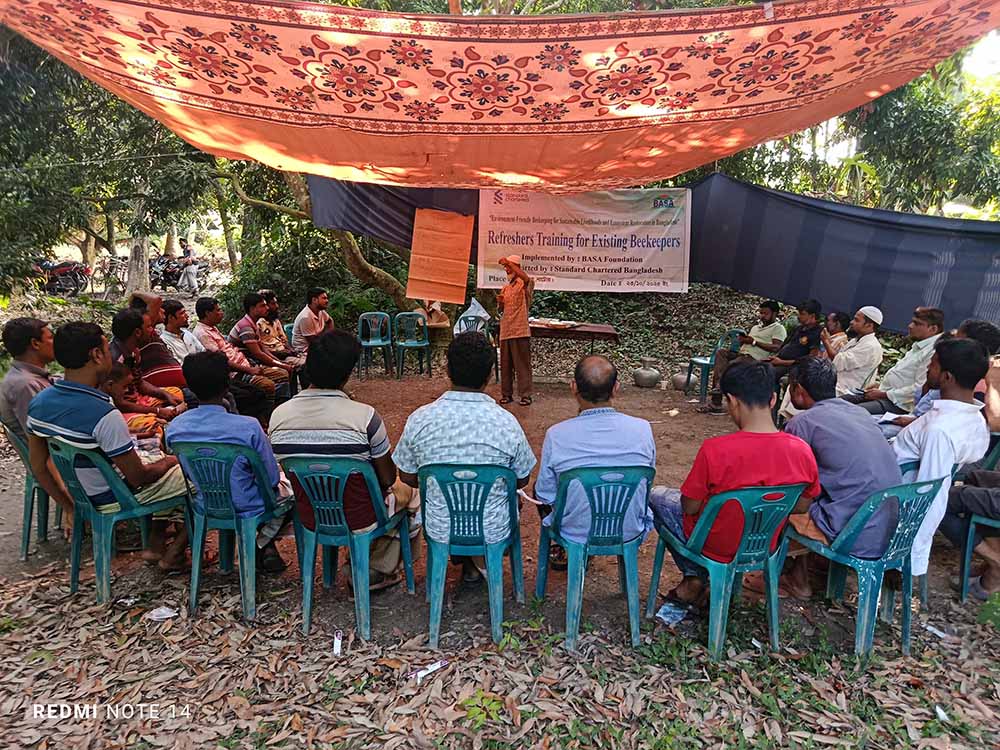
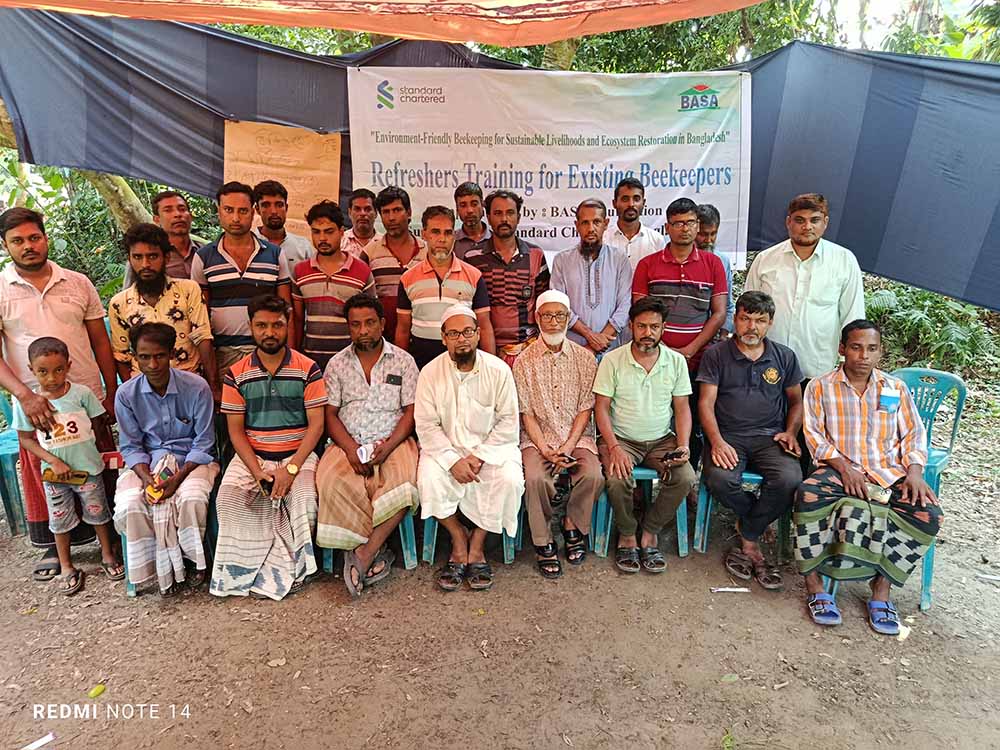
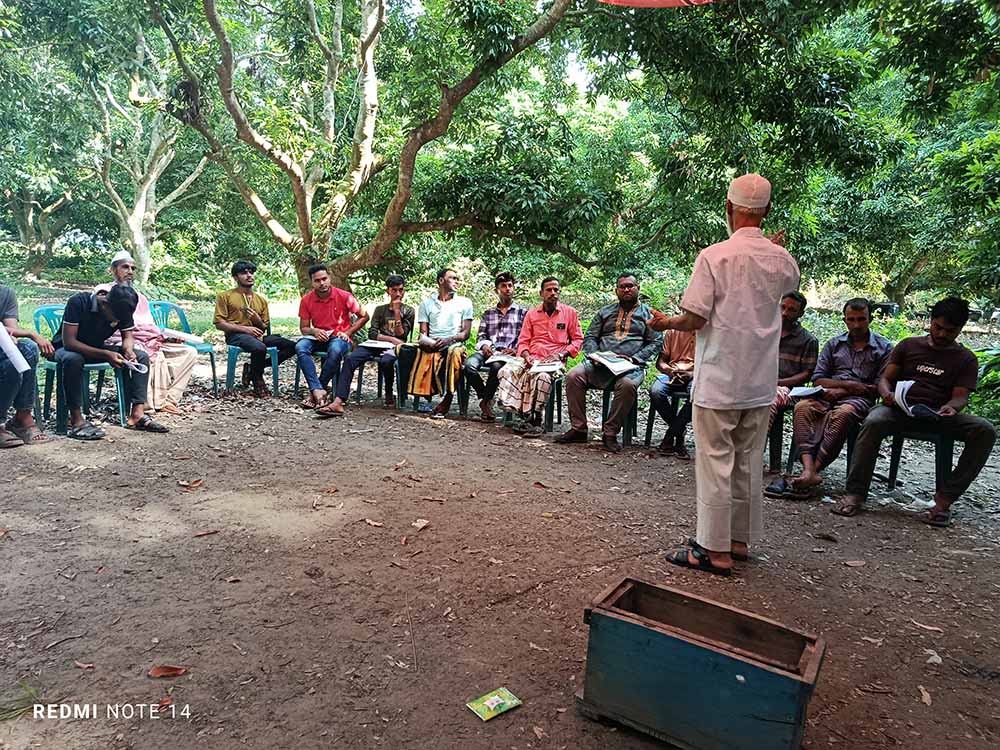
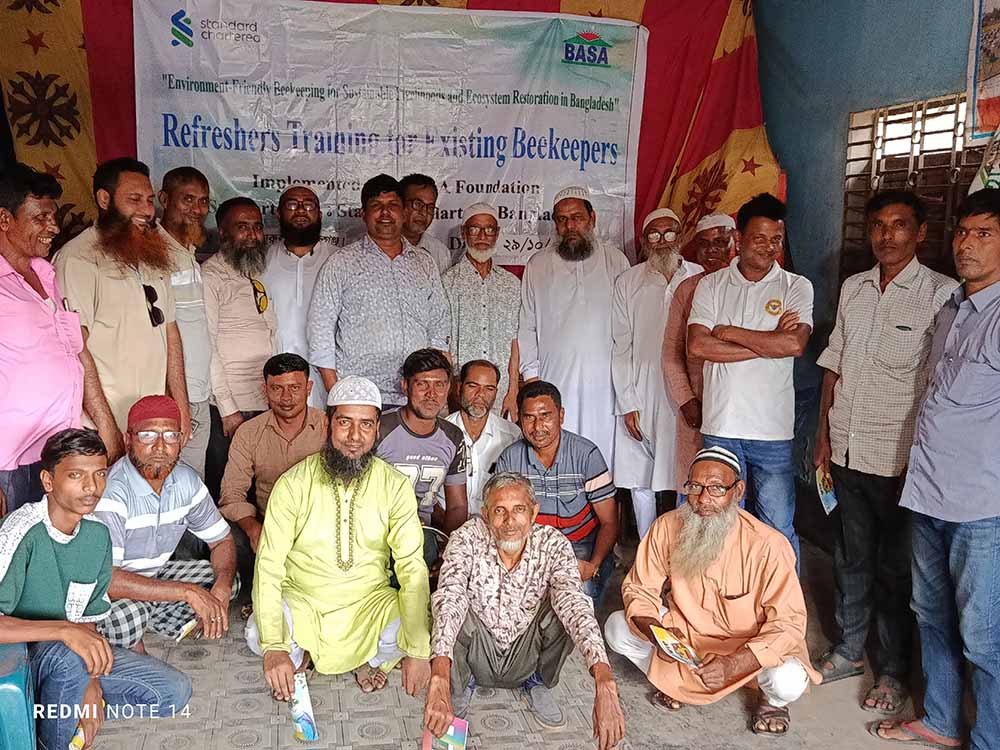
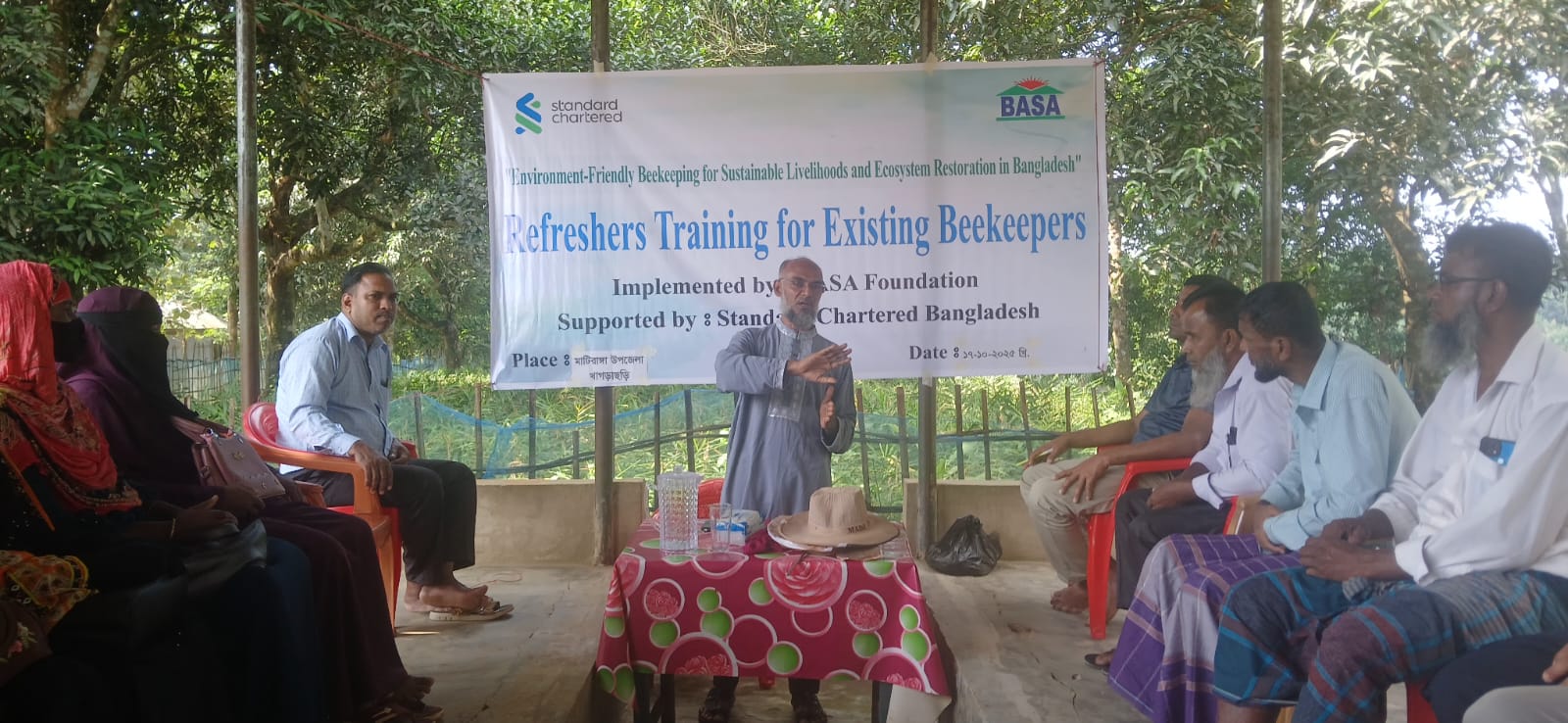
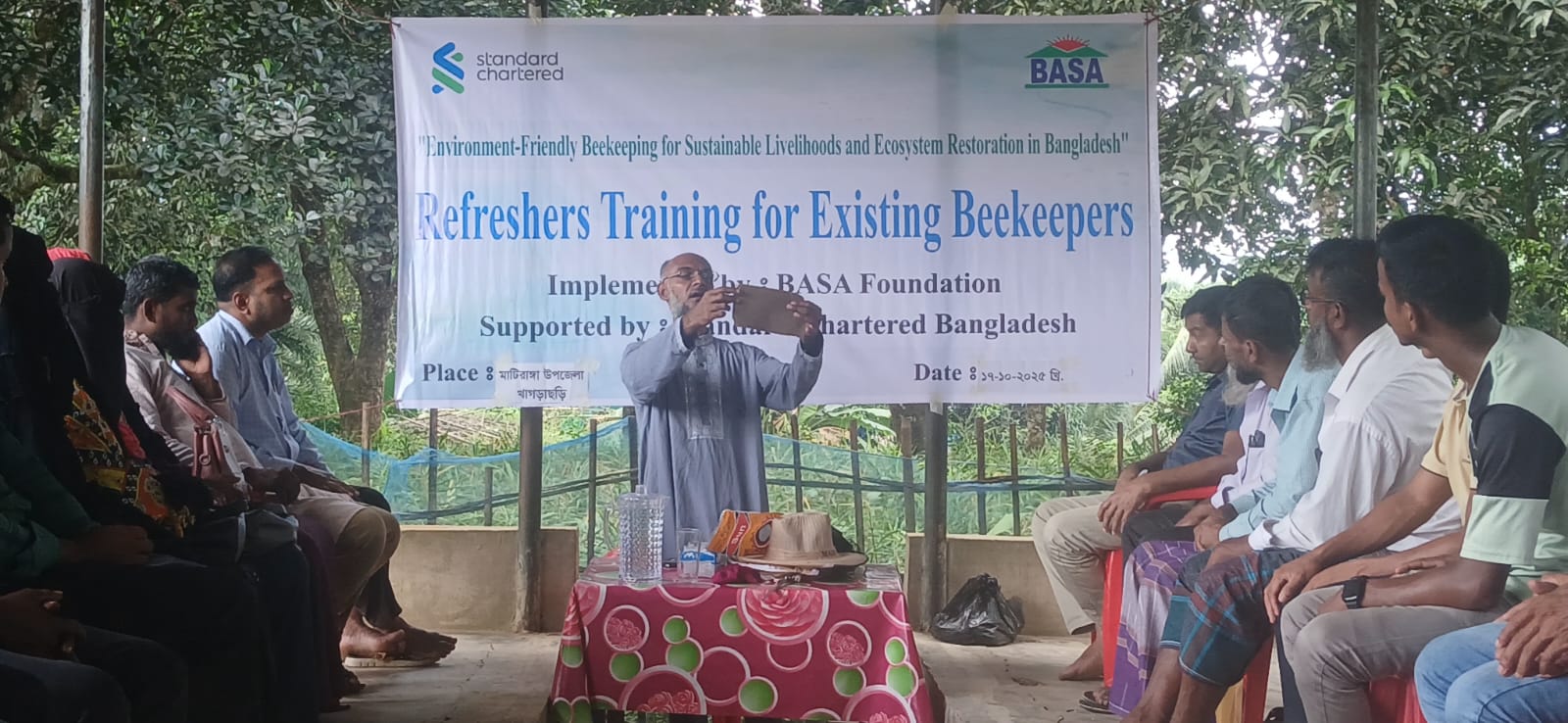
- Refreshers training (500 existing Beekeepers, 1 day) on safe honey production, processing, marketing & environment
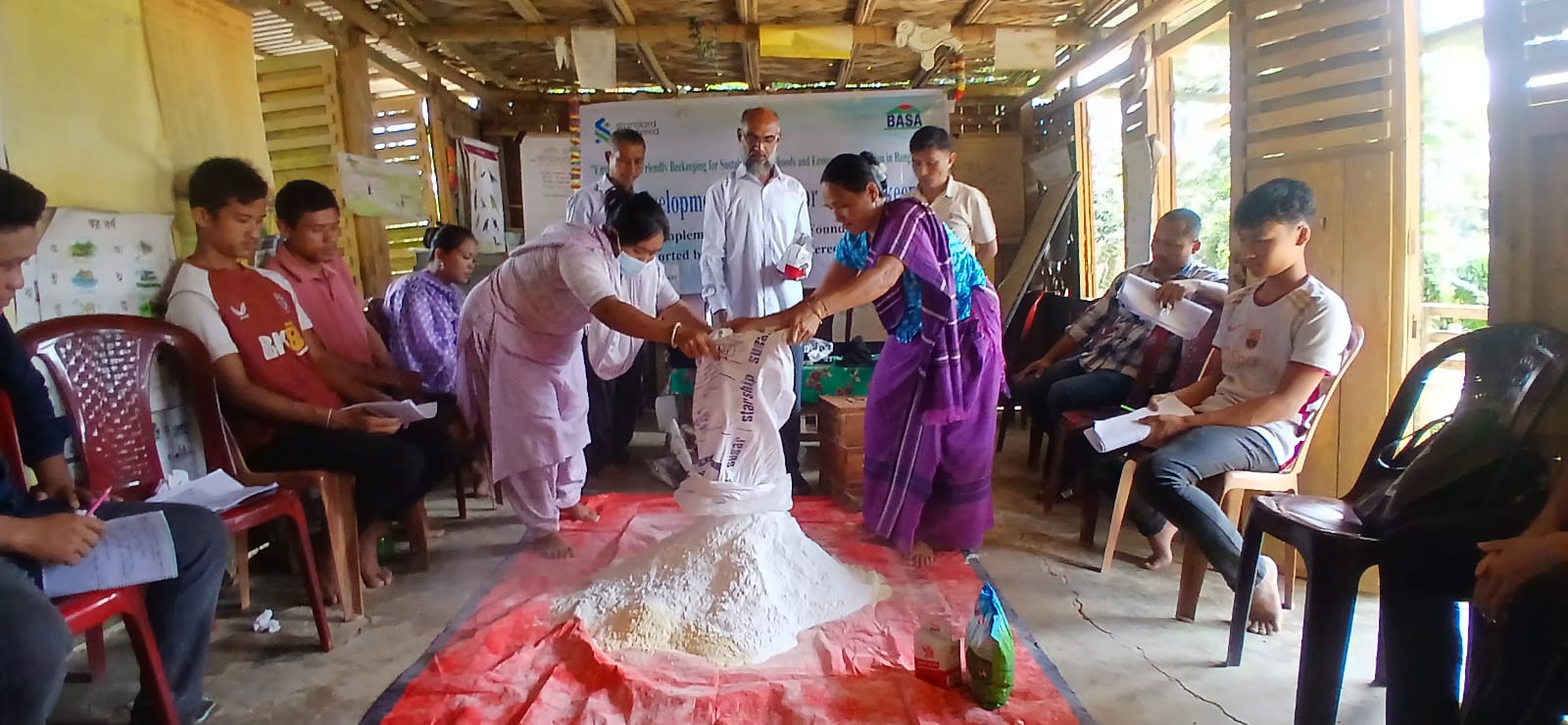
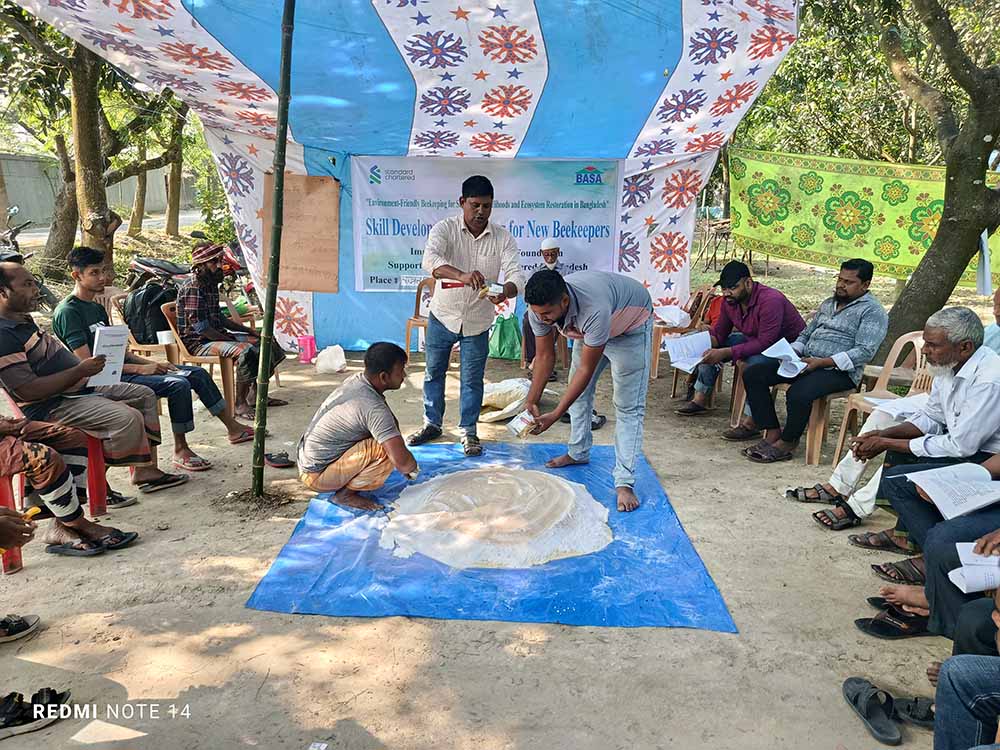
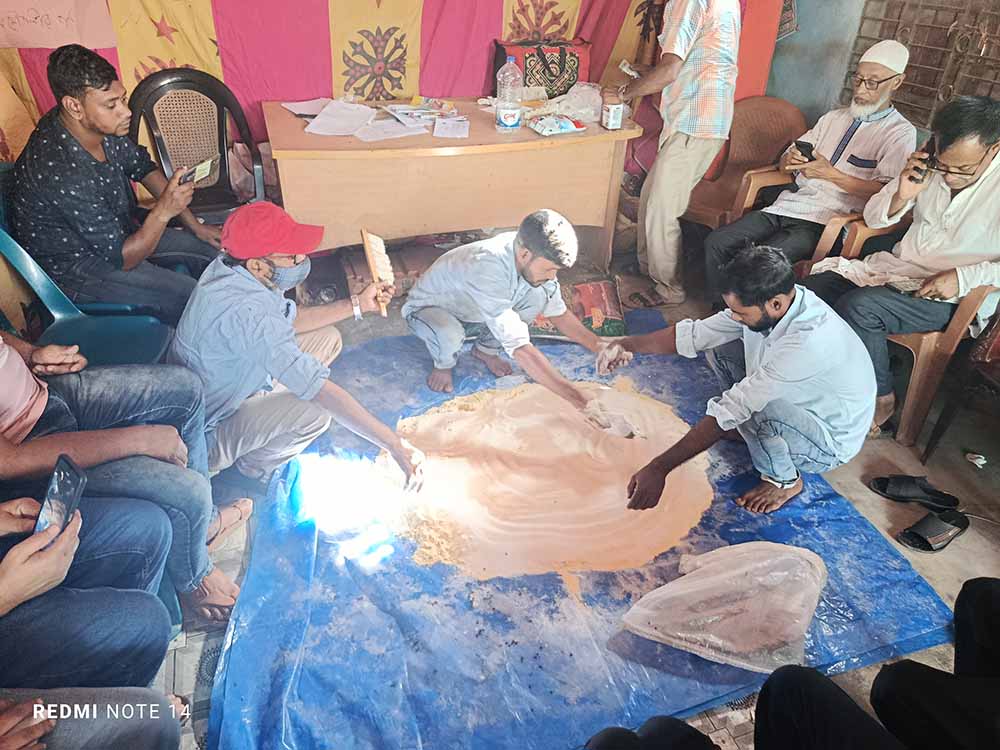
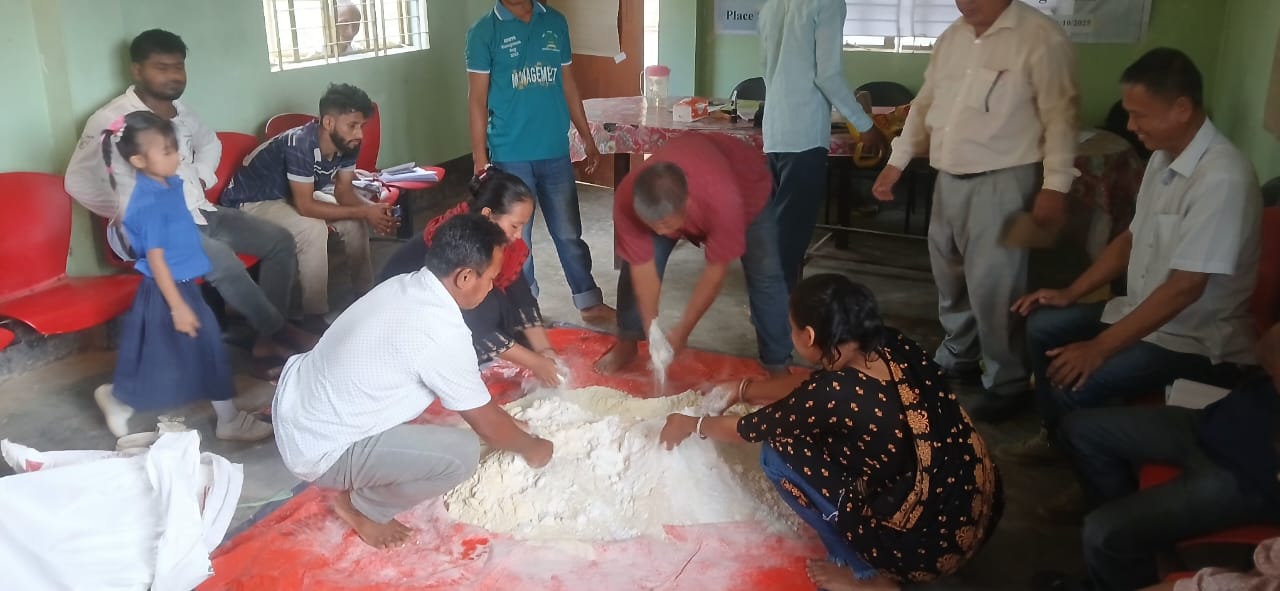
- Demonstration of artificial Bee food preparation in 25 Beekeepers group training for dearth period management and distribution among 625 beekeepers
- Beekeeping equipment distribution for new Beekeepers of hilly areas
- Beekeeping equipment distribution for new Beekeepers of plain areas
- Honey Crop Producers (975 Honey crop producers) Training on Integrated Pest Management (IPM), Pollination for environment friendly Beekeeping
- Providing 4 honey processing machine to the existing 4 entrepreneurs in plain and hilly areas
- Providing 4 comb foundation sheet machine to the existing 4 entrepreneurs in plain and hilly areas.
- Distribution honey extractor machines to new Beekeepers of hilly areas
- Distribution honey extractor machines to new Beekeepers of plain areas
- Distribution of food grade containers for honey storage to the 625 beekeepers
- Support for packaging materials of honey branding to 20 Entrepreneurs (Beekeepers)
- Beekeeping and environment friendly tree distribution to 1075 Beekeepers for dearth period management
- Support to 3 Beekeepers for improved Bee Queen production for supply bee queen to other Beekeepers
- "Provision of Technical Support to 725 Beekeepers in Hill Areas by Local Service Providers (LSP), Conducted 3 Times per Beekeeper During the Project Period"
- Conduct district workshops to increase the promotion of honey
- Exposure visit of 40 Beekeepers
[1] Prospect of Beekeeping in Bangladesh, AgEcon Search
[2] BEEKEEPING FOR RURAL DEVELOPMENT, ITS POTENTIALITY AND BEEKEEPING AGAINST POVERTY - BANGLADESH PERSPECTIVE
[3] https://www.tbsnews.net/economy/corporates/standard-chartered-contributes-tk29cr-uplift-800-apiculture-entrepreneurs-basa?utm_source=chatgpt.com
-
Donar Name:
Standard Chartered Bank.
-
Date:
2 years (August 2025 to July 2027)
-
Category:
Apiculture(Beekeeping)
-
Location:
36 Upazilas of Tangail, Gazipur, Pabna, Natore, Sirajganj, Chapainababganj, Rajshahi districts and the hill districts of Rangamati, Bandarban, and Khagrachari.
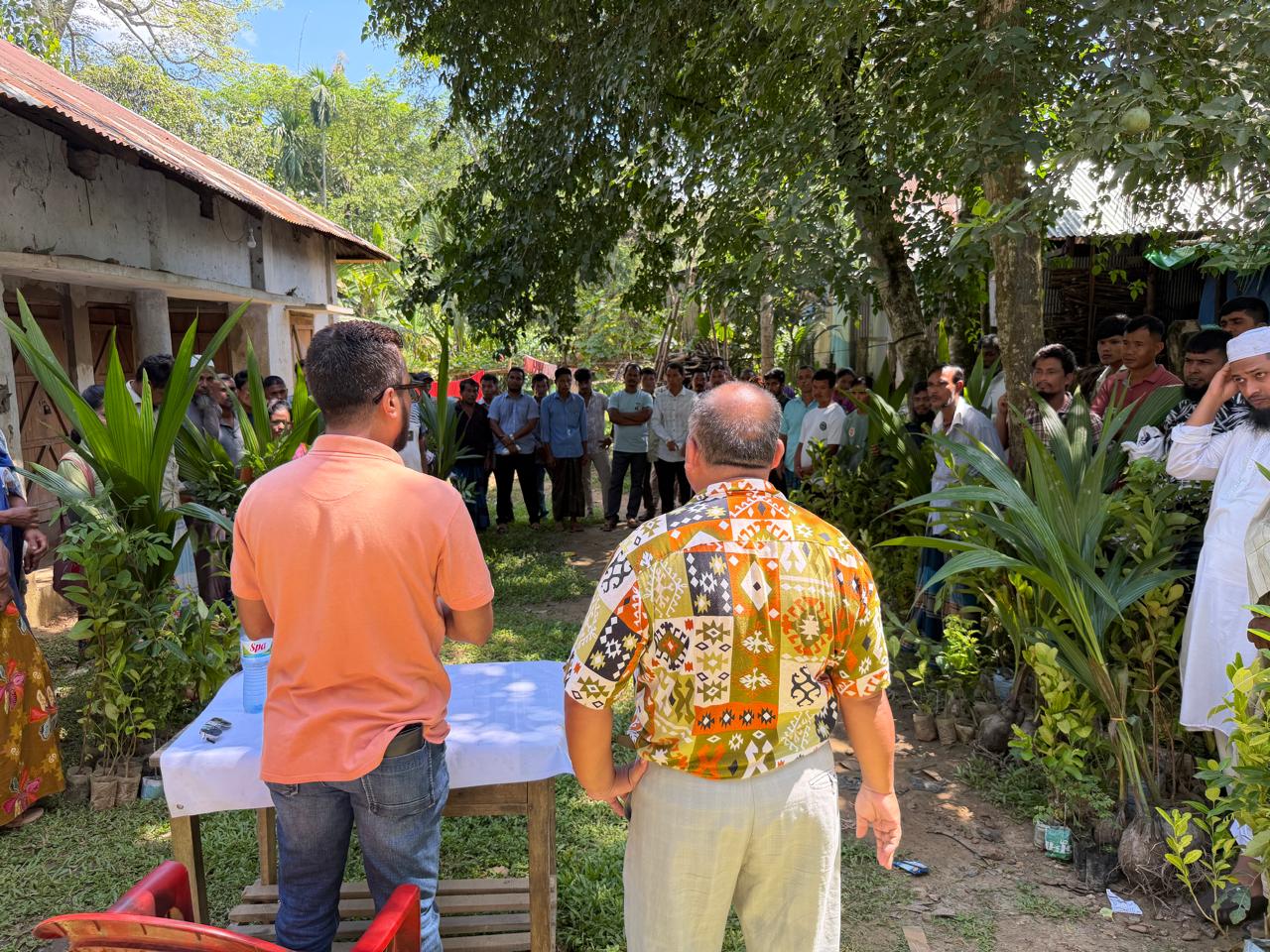
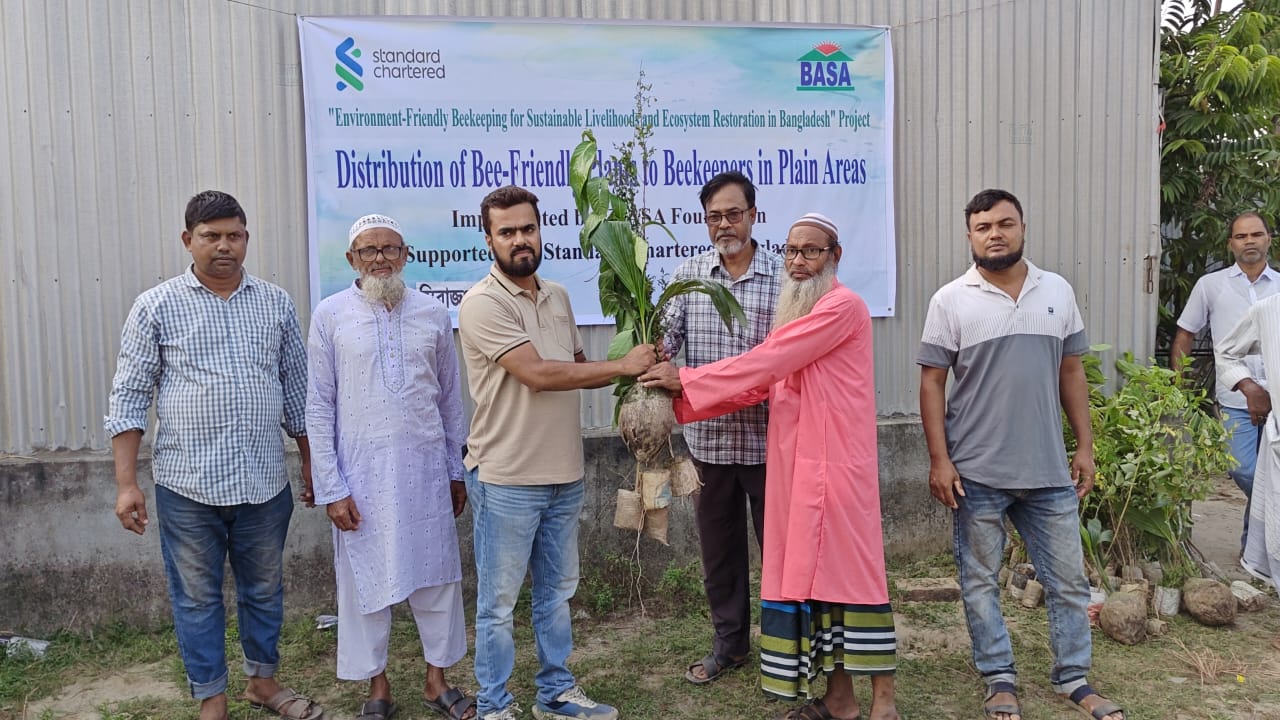
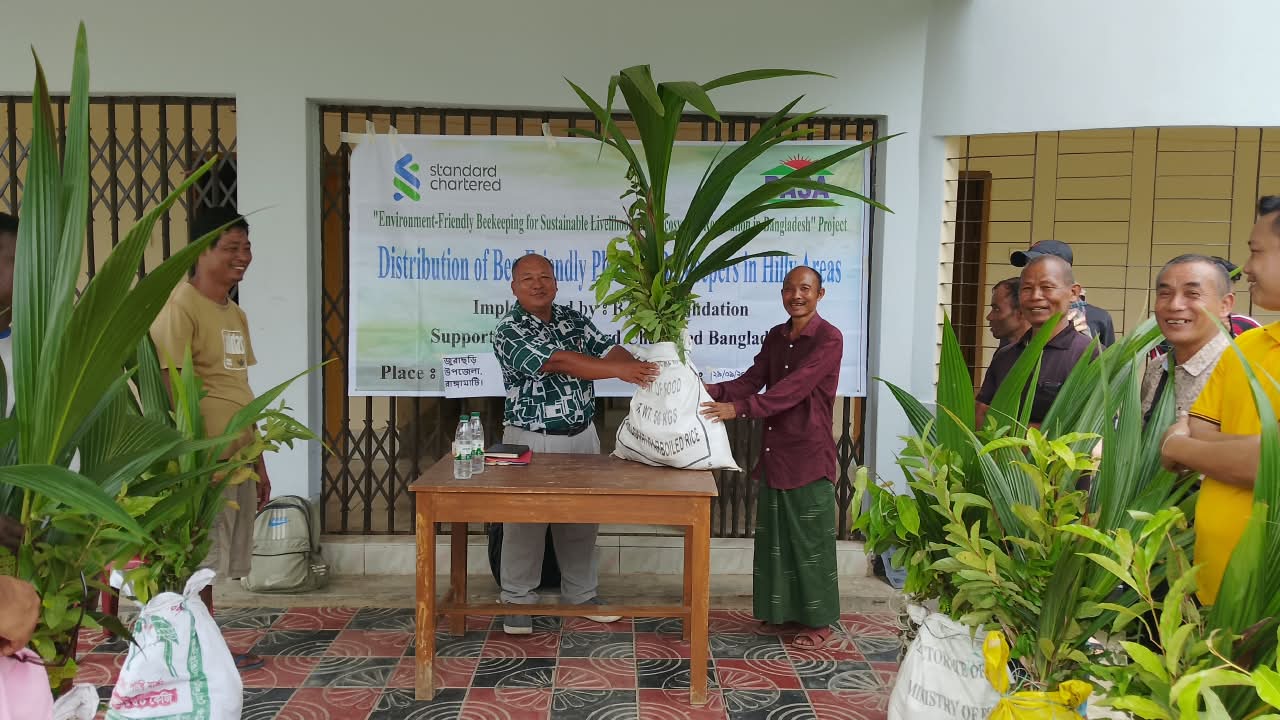
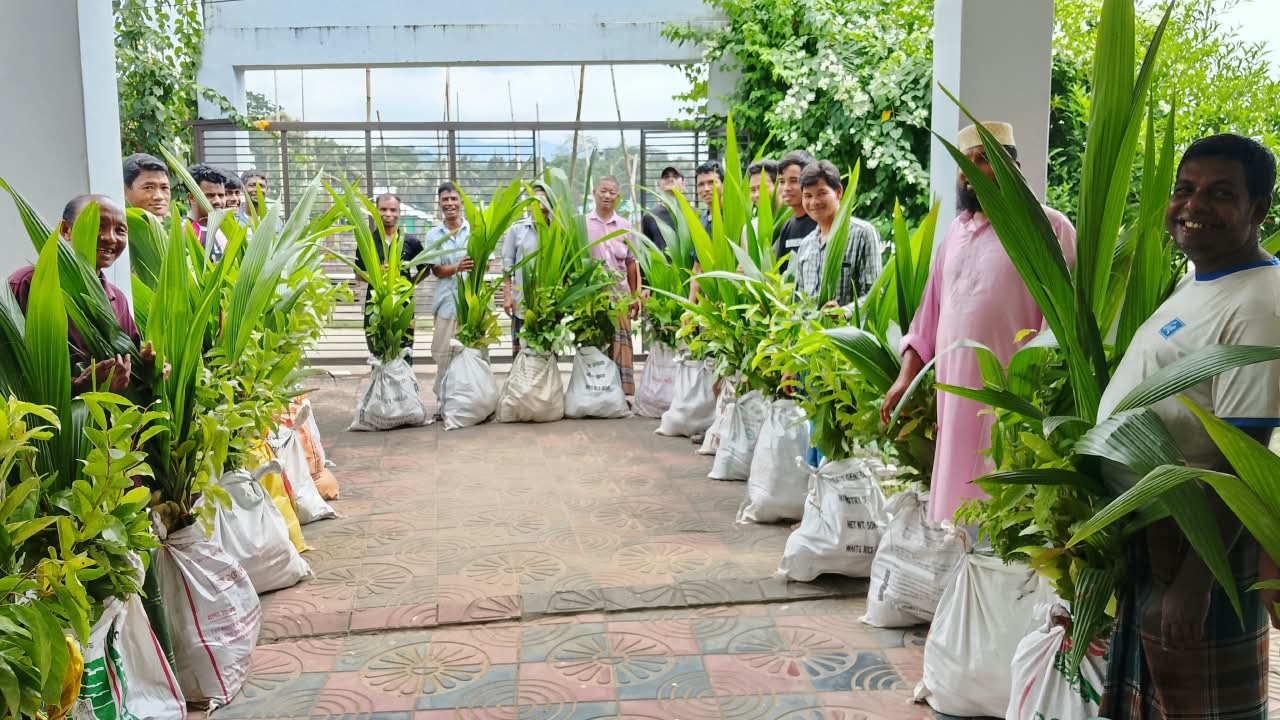
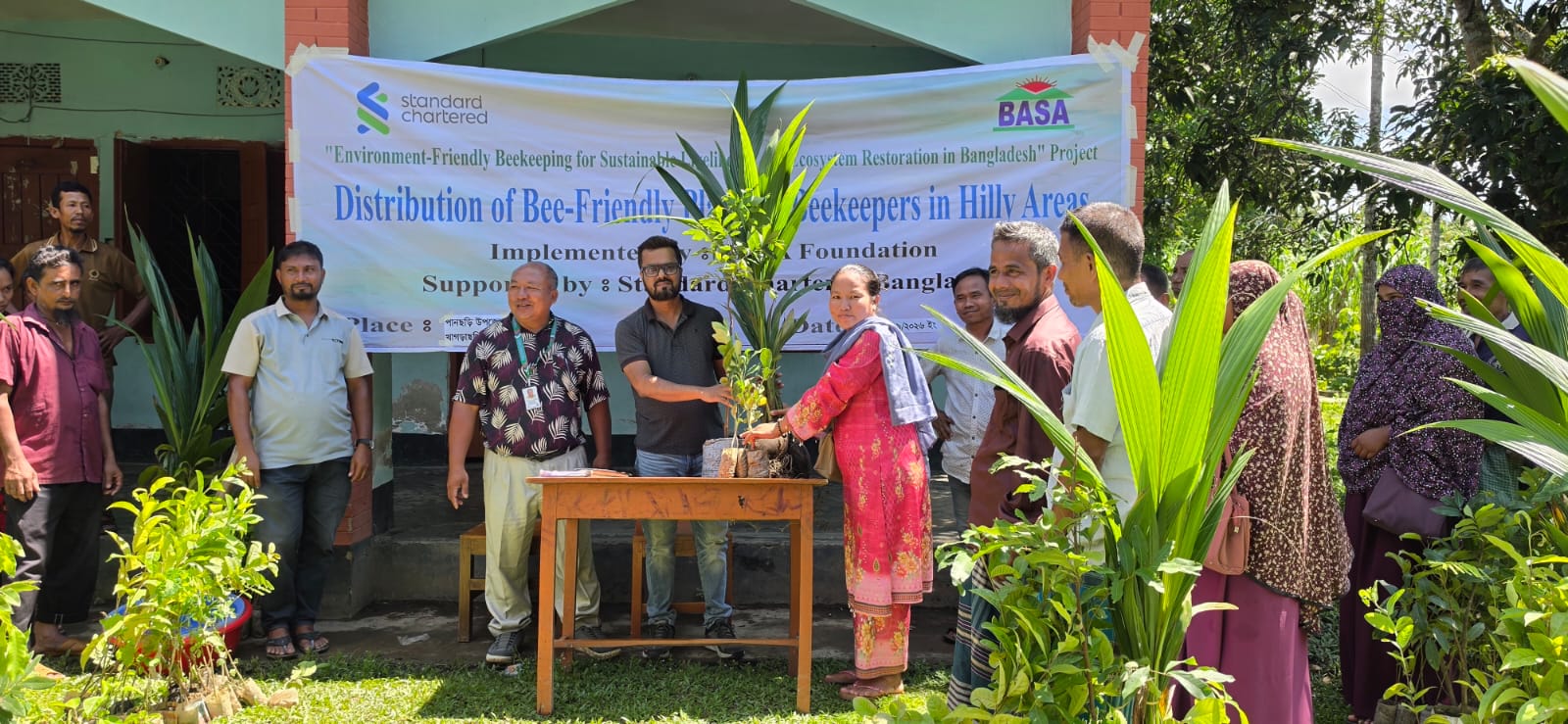
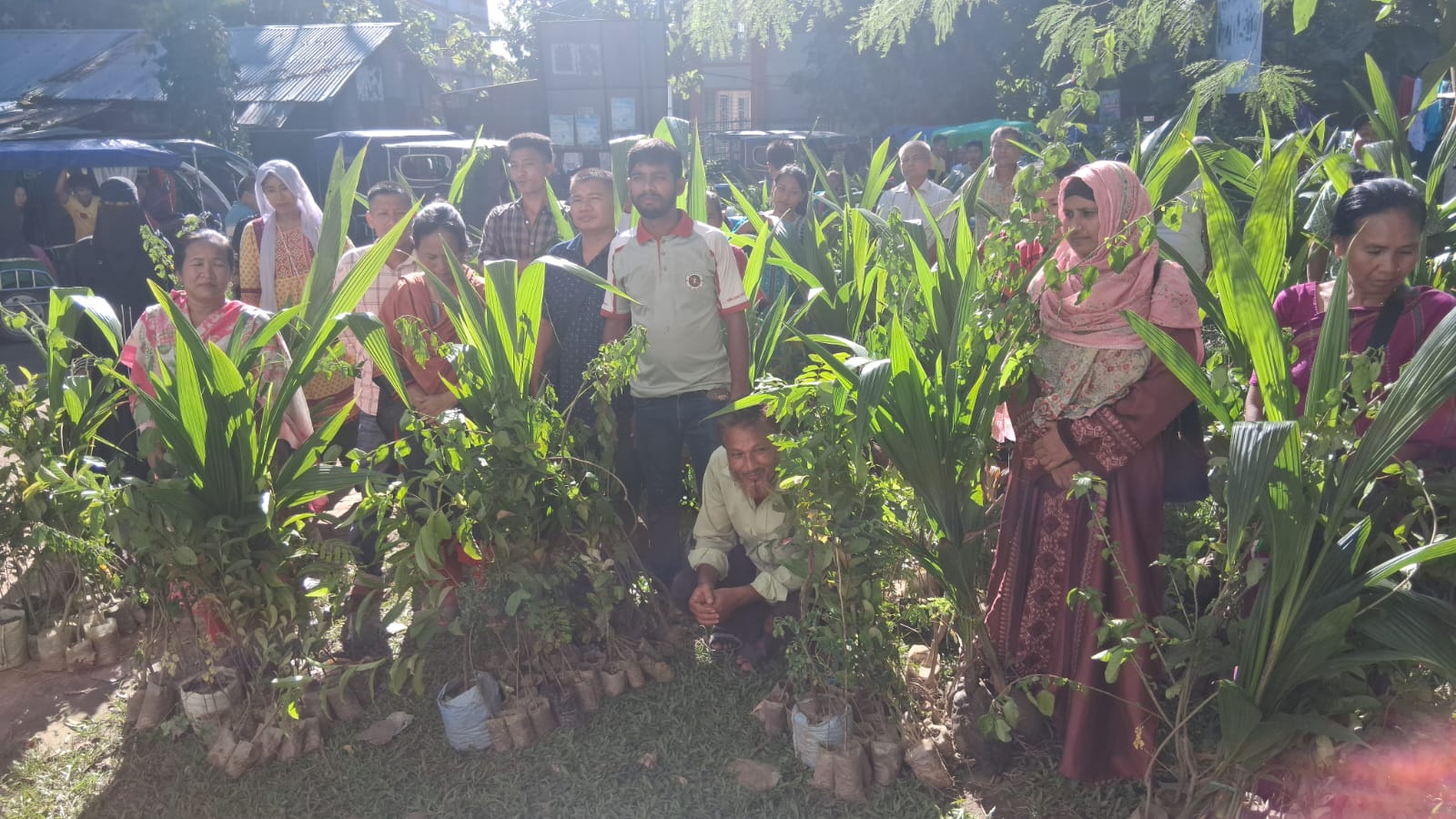
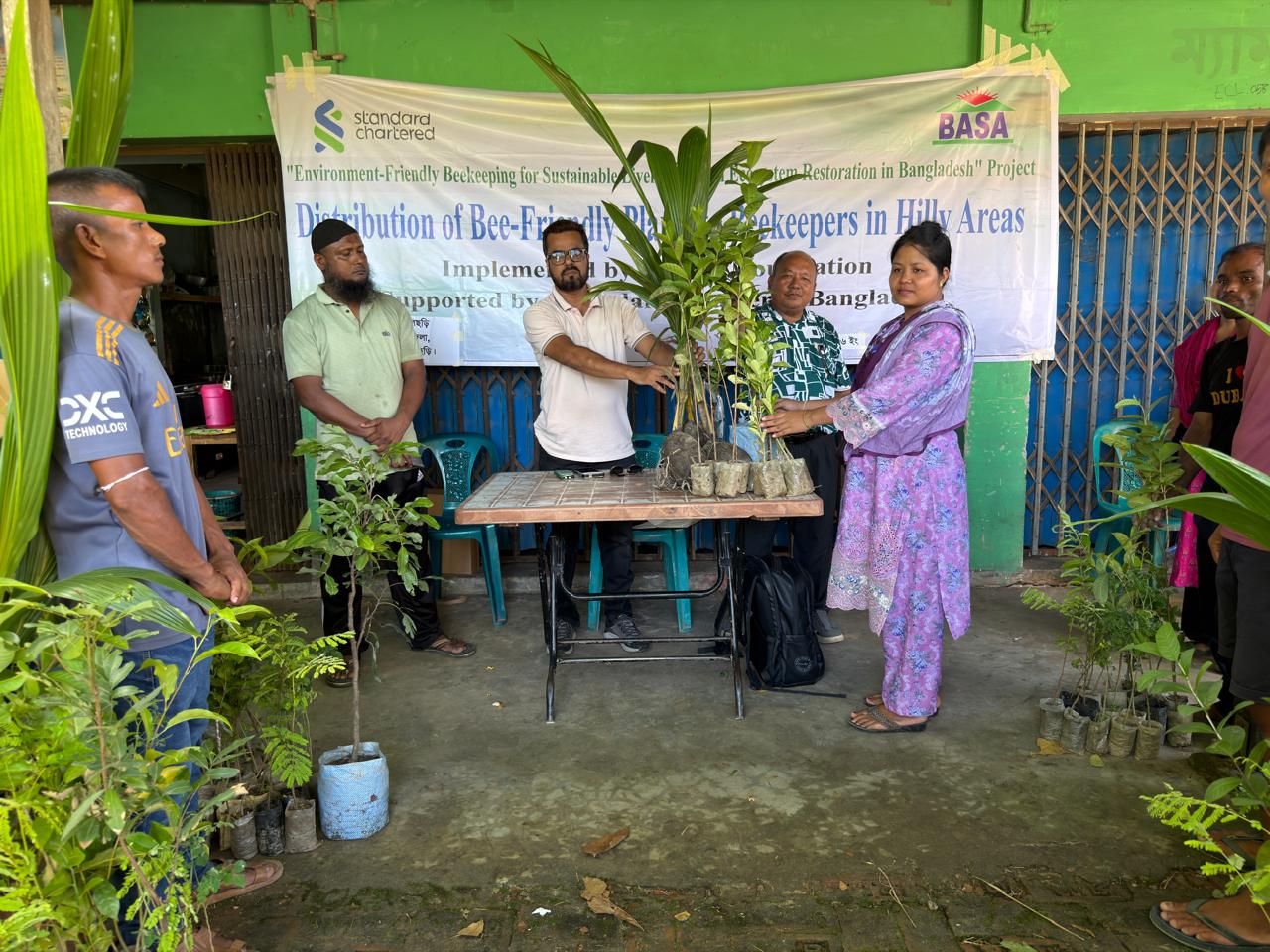
BASA Foundation, with support from Standard Chartered Bank (SCB), has distributed 46,125 bee-friendly saplings among 1,075 beekeepers across 36 upazilas in 10 districts of Bangladesh under the project “Environment-Friendly Beekeeping for Sustainable Livelihoods and Ecosystem Restoration in Bangladesh.” The initiative aims to address seasonal floral scarcity by increasing natural sources of nectar and pollen for honeybees through fruit-bearing, medicinal and flowering plants. It is expected to improve honeybee health, reduce supplementary feeding costs and strengthen sustainable beekeeping. The initiative will also contribute to family nutrition, additional income opportunities, biodiversity conservation, pollination and ecosystem restoration, promoting resilient rural livelihoods and environmental sustainability.
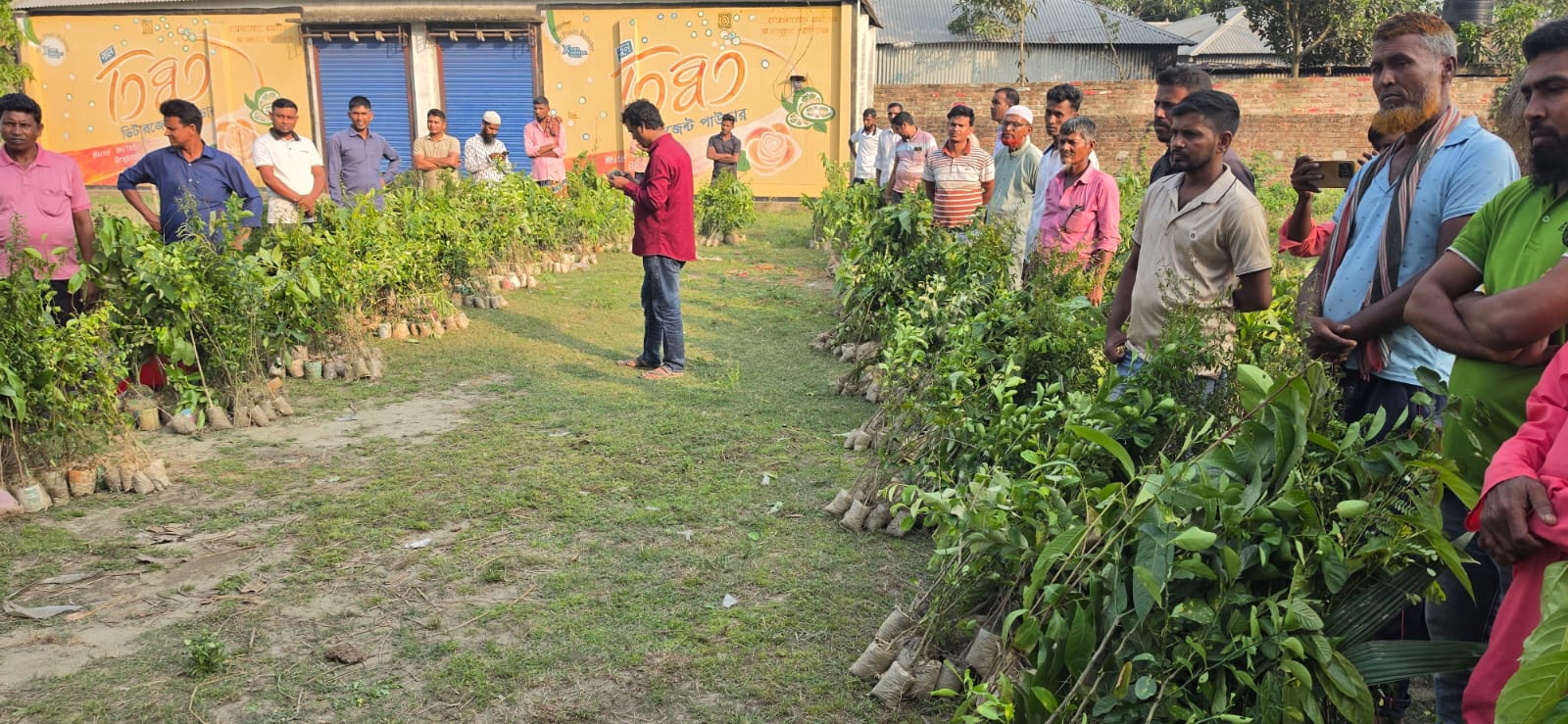
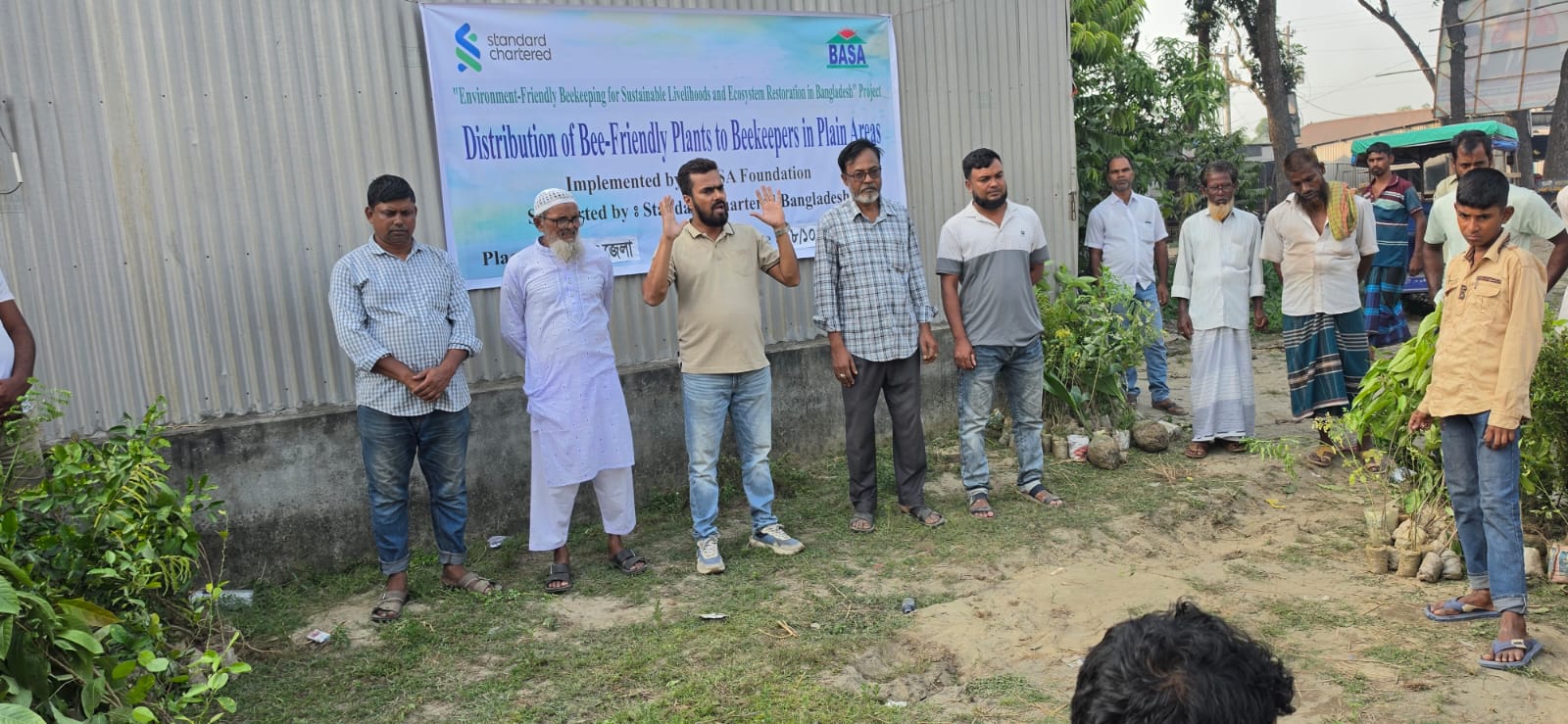
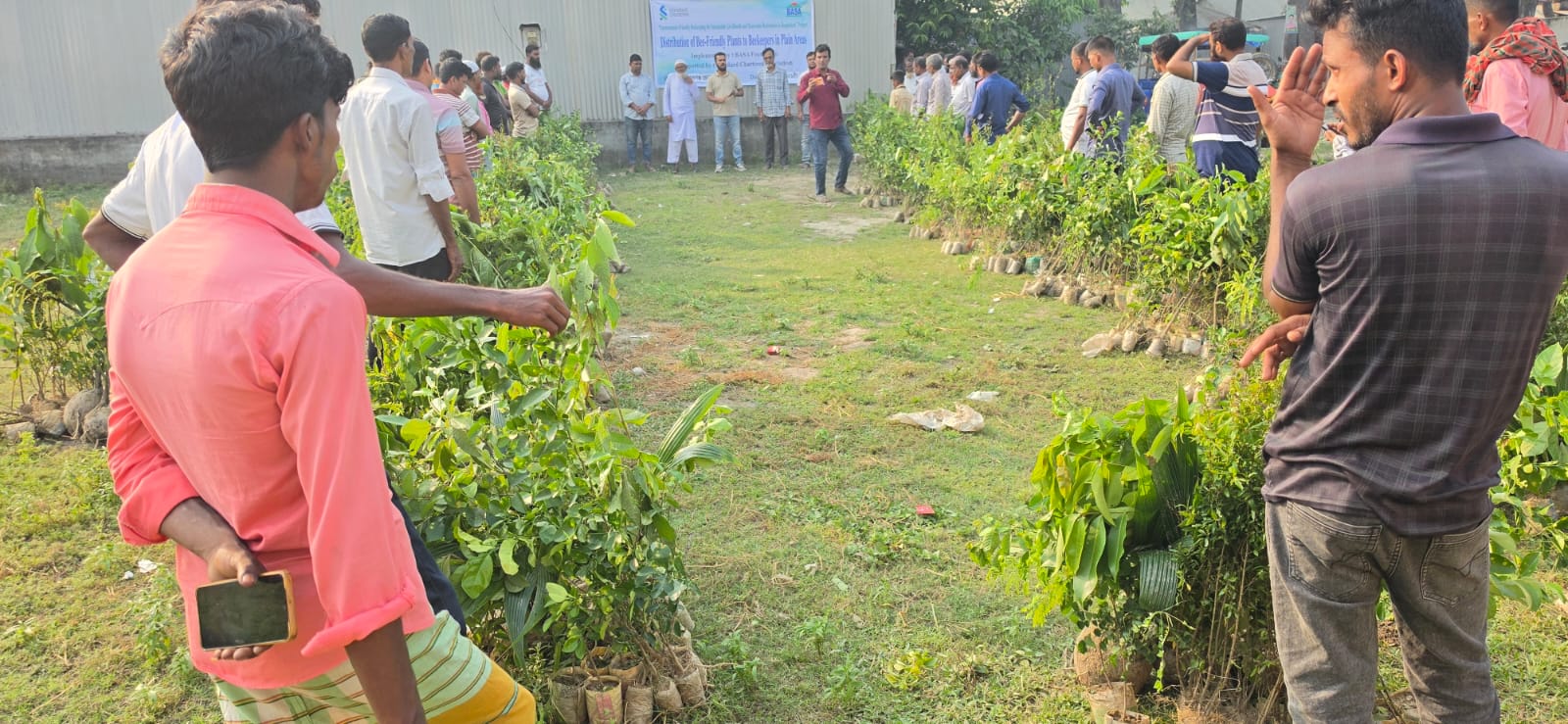
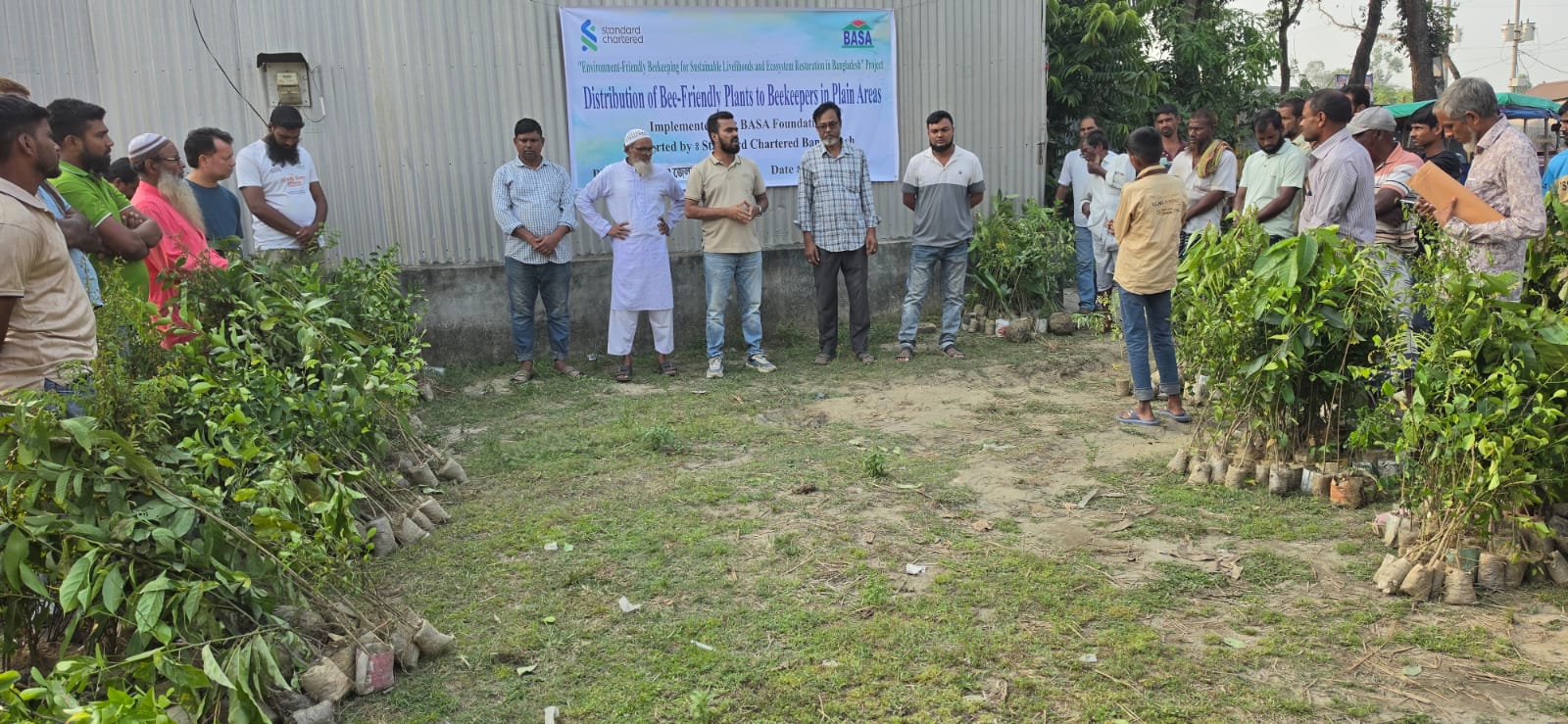
Following successful implementation in Bangladesh’s three hill districts, BASA Foundation has expanded its bee-friendly plant distribution initiative to the plains, reaching 350 beekeepers across 7 districts and 20 upazilas.In Sirajganj, 2,550 saplings of 14 fruit, medicinal and flowering species were distributed among 50 beekeepers, with each receiving 51 saplings. These plants will provide natural nectar and pollen, especially during seasonal floral scarcity.The initiative aims to reduce supplementary feeding costs, improve honeybee colony health, enhance crop pollination and conserve biodiversity. Through this nature-based approach, BASA Foundation promotes sustainable beekeeping, resilient livelihoods and healthier ecosystems across Bangladesh.
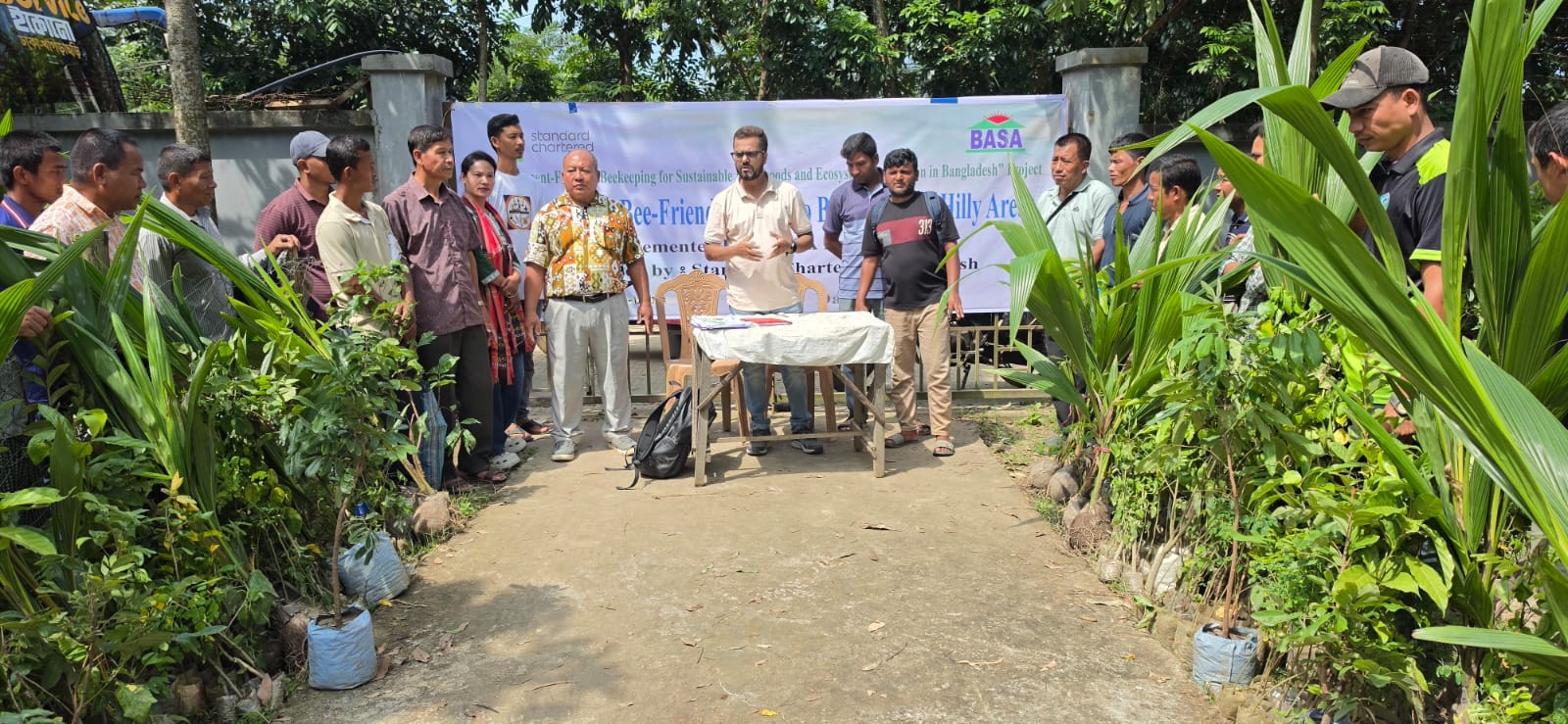
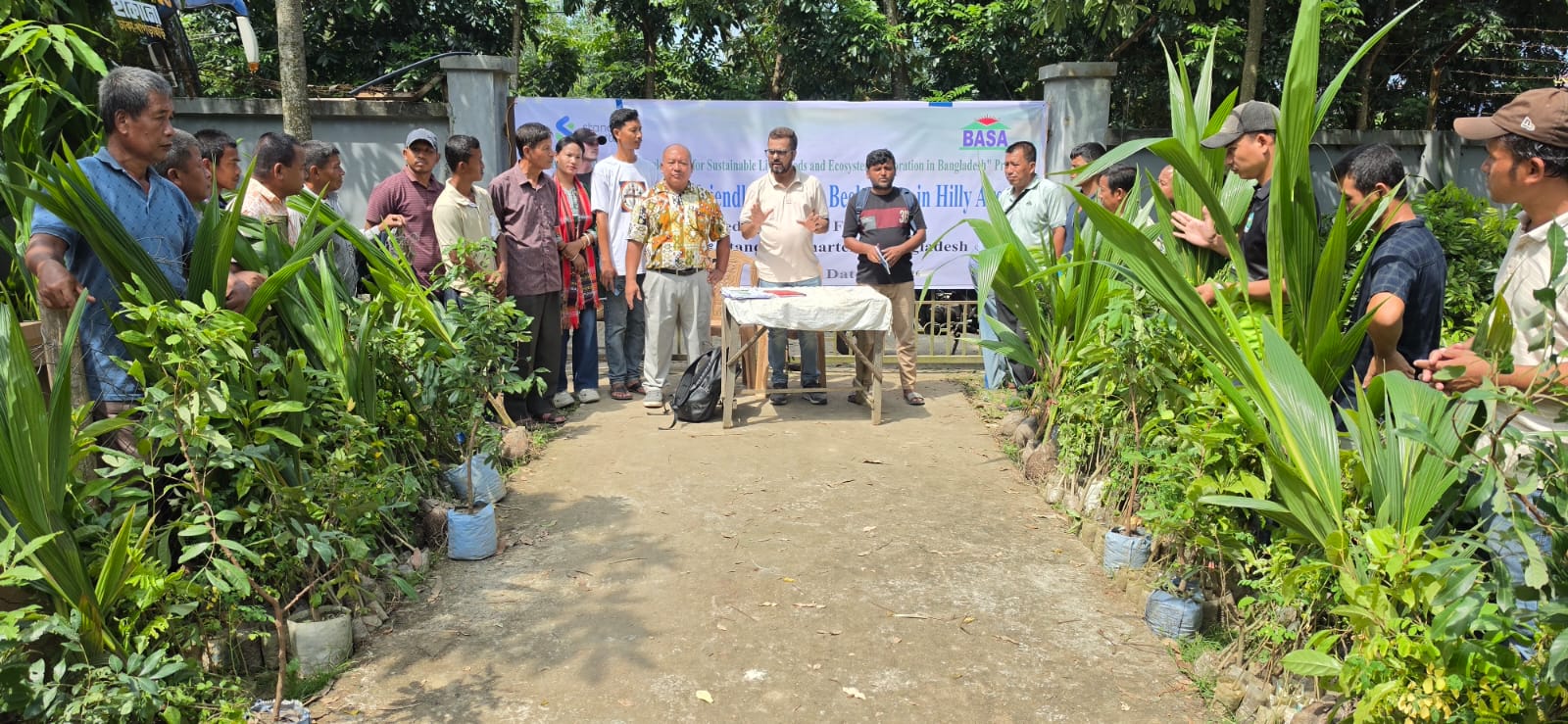
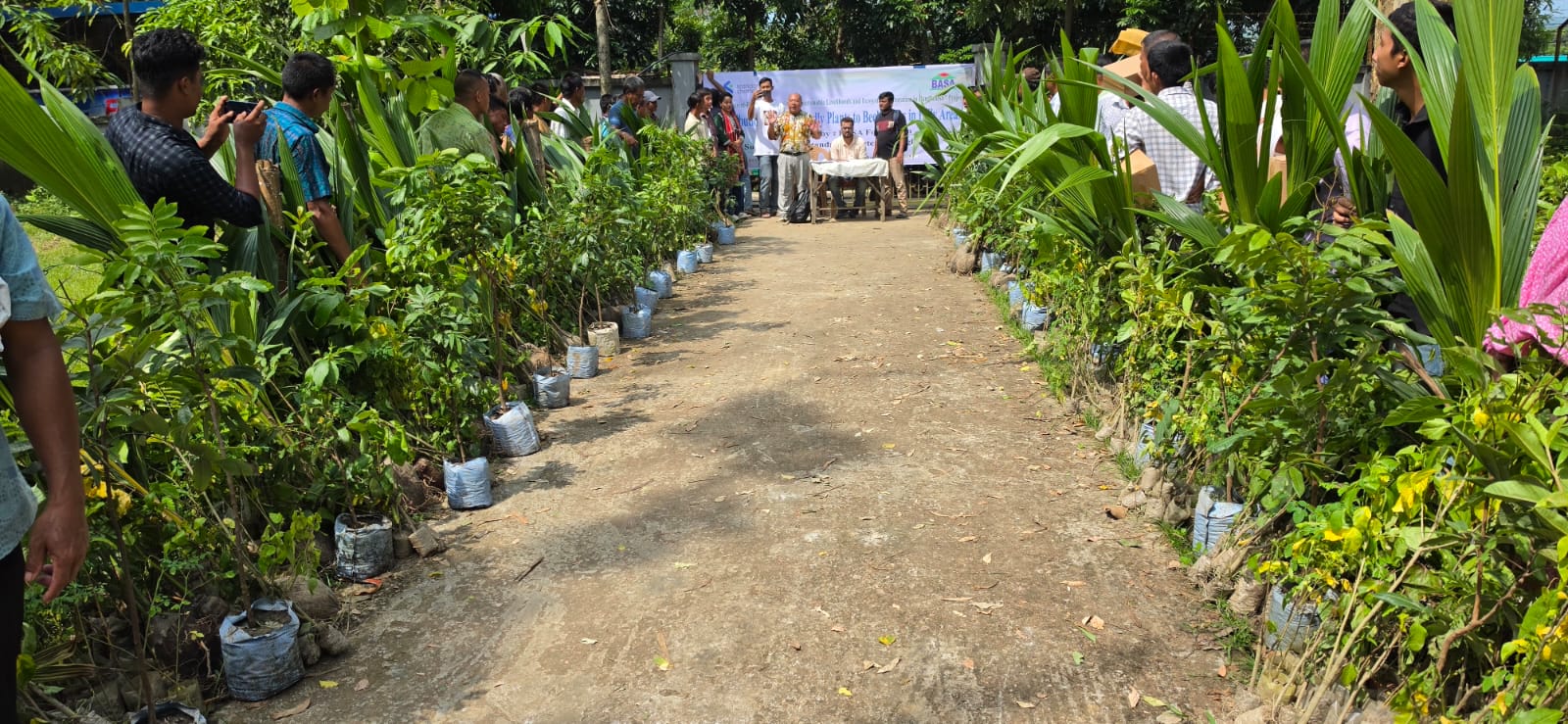
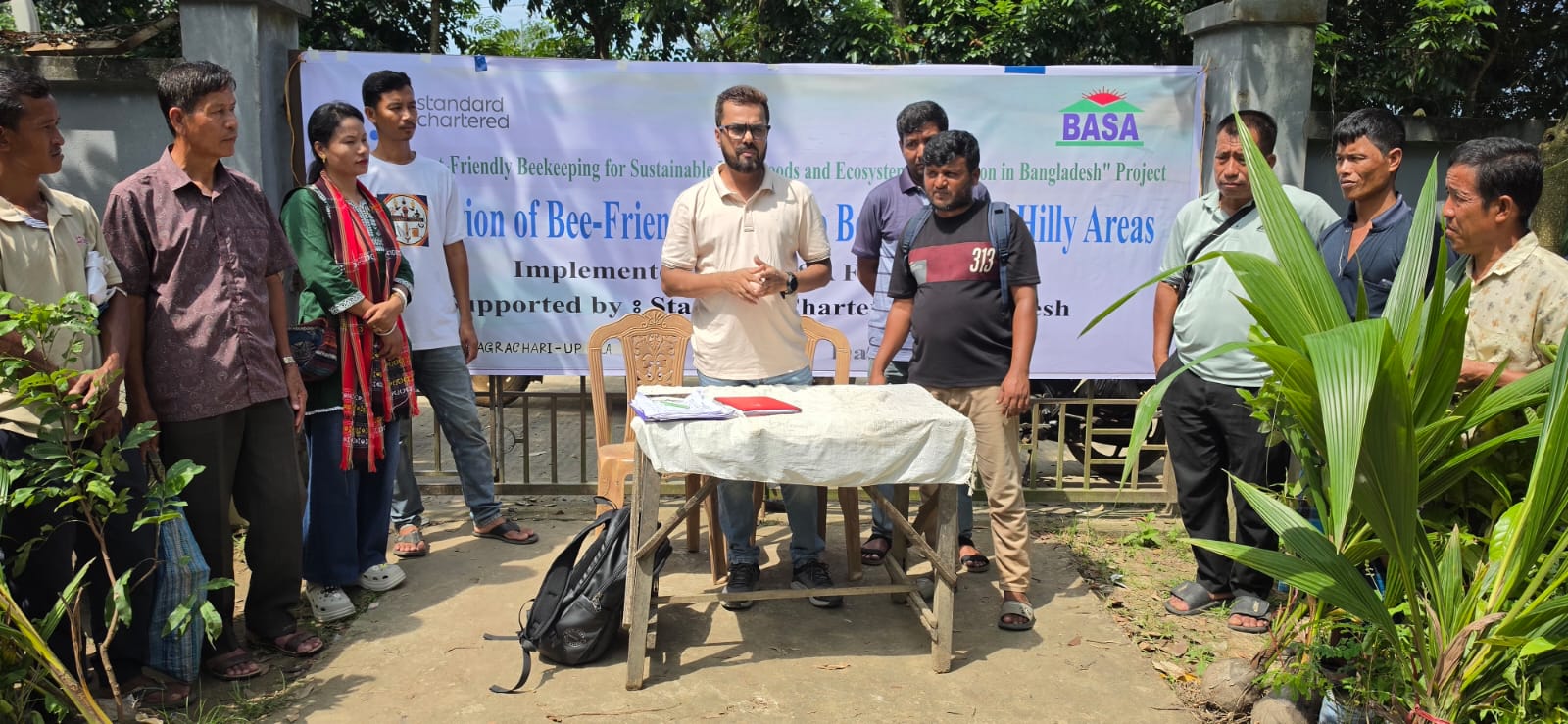
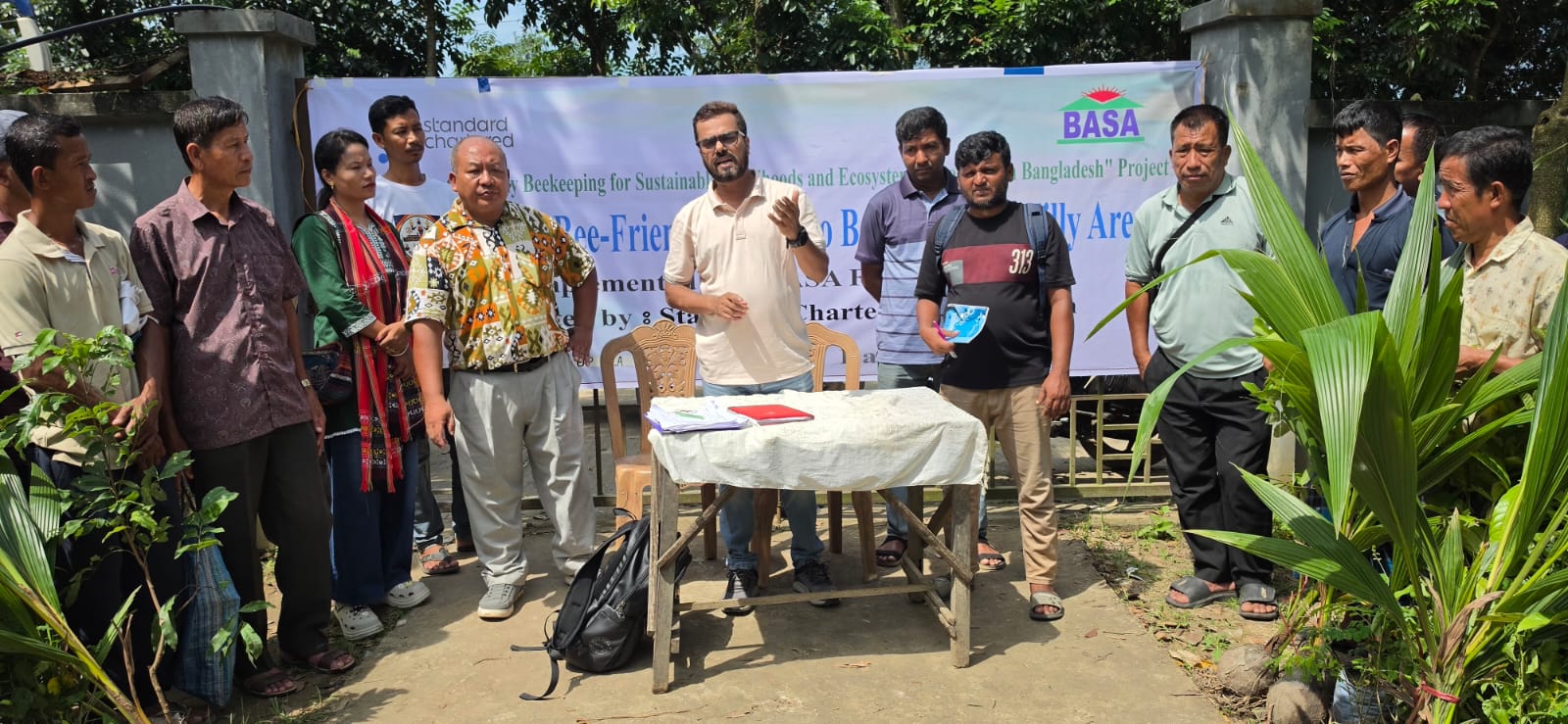
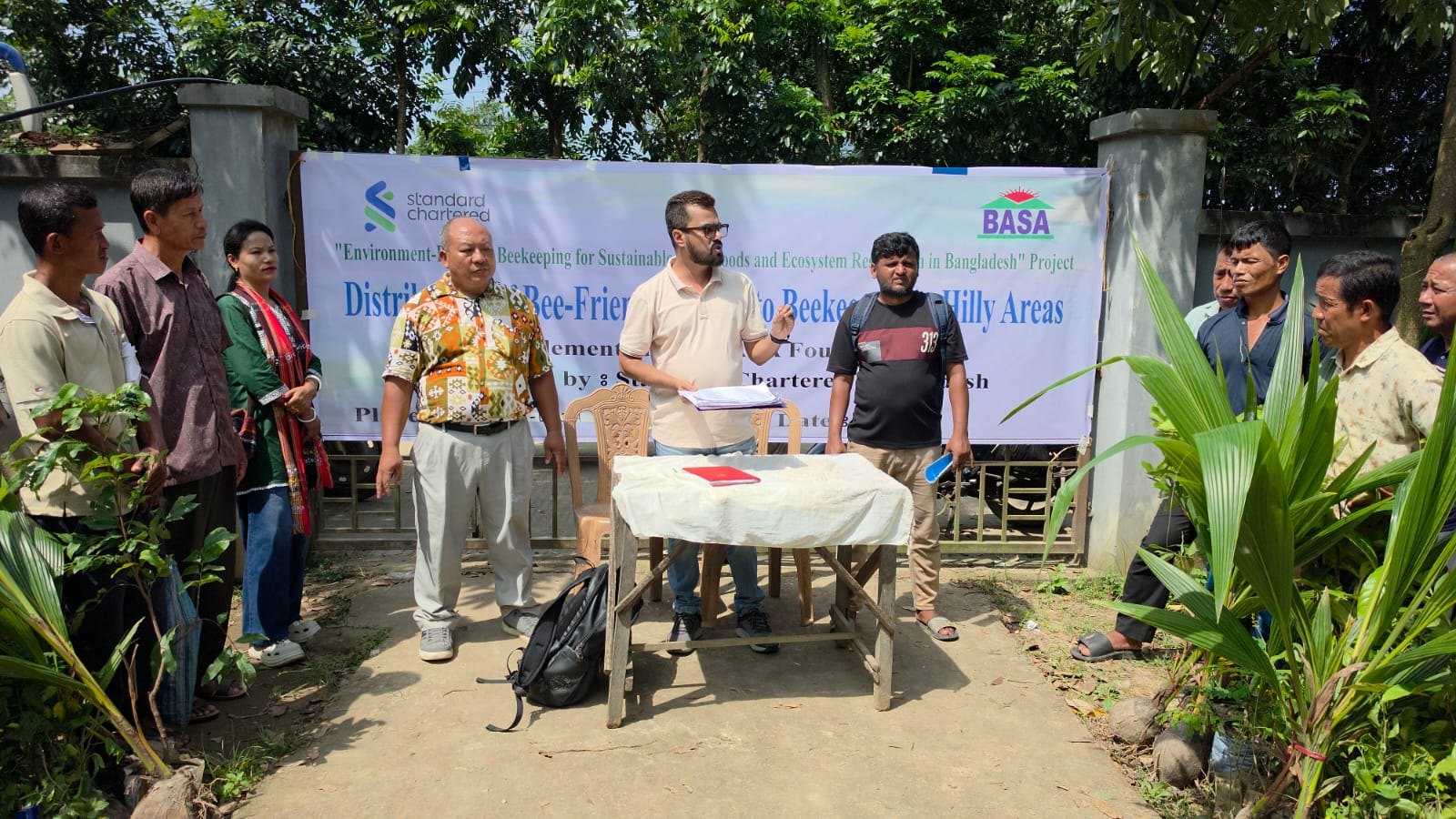
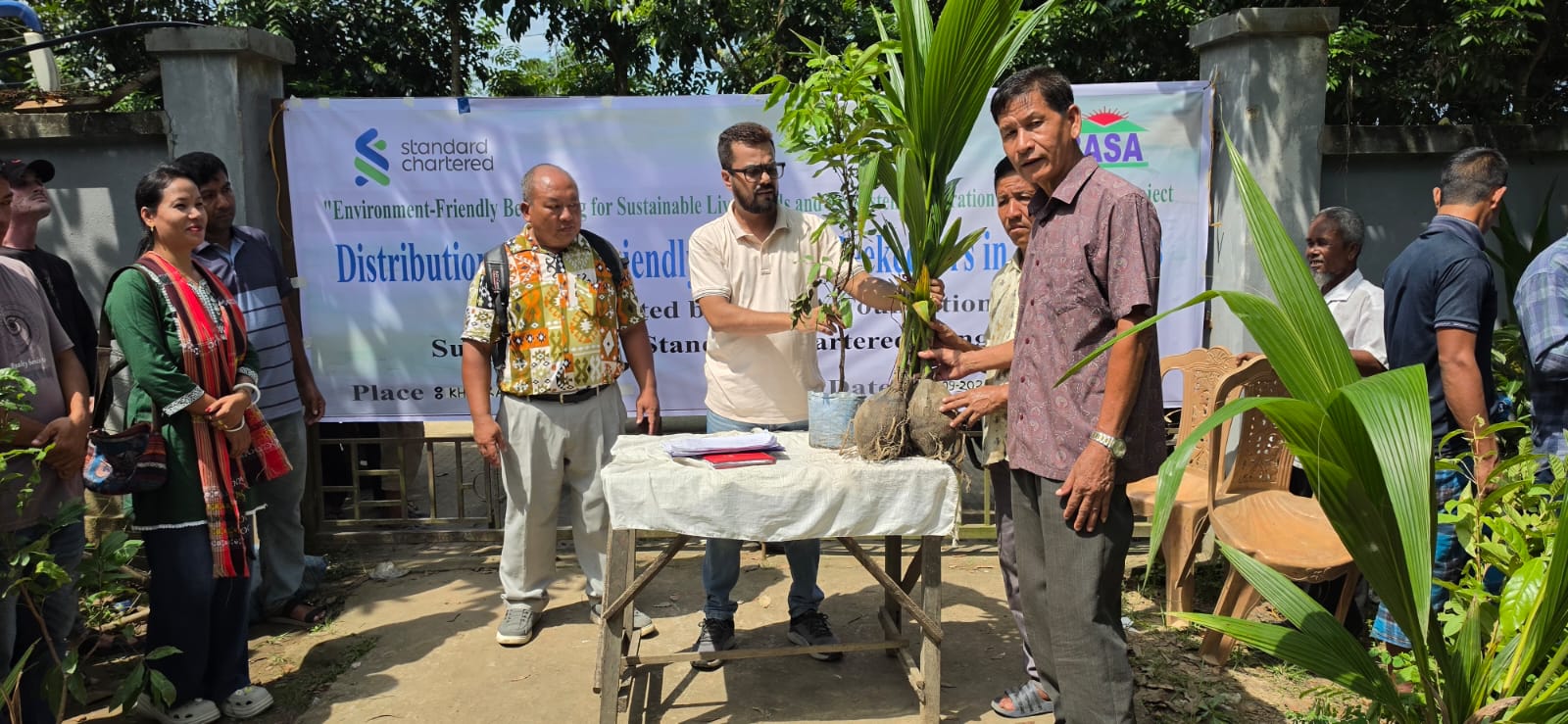
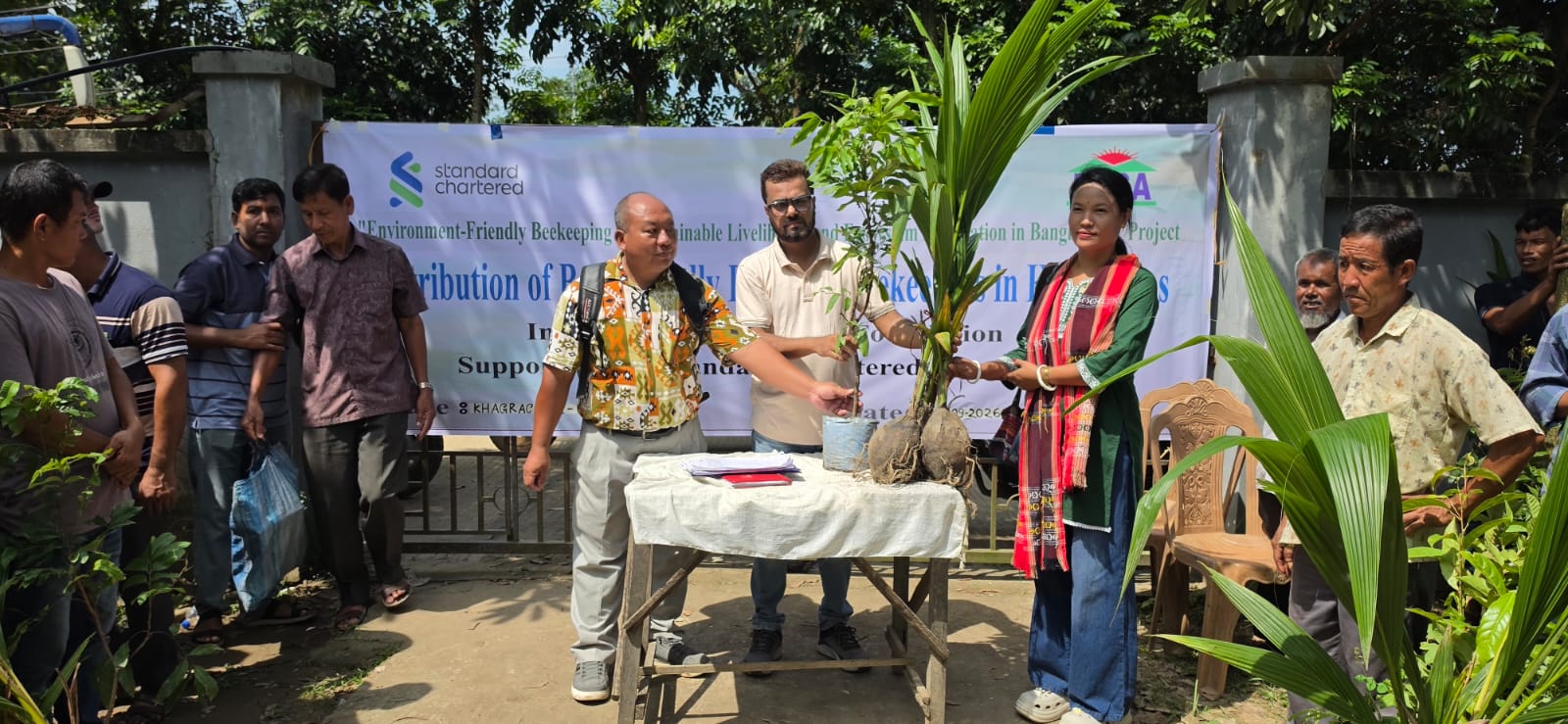
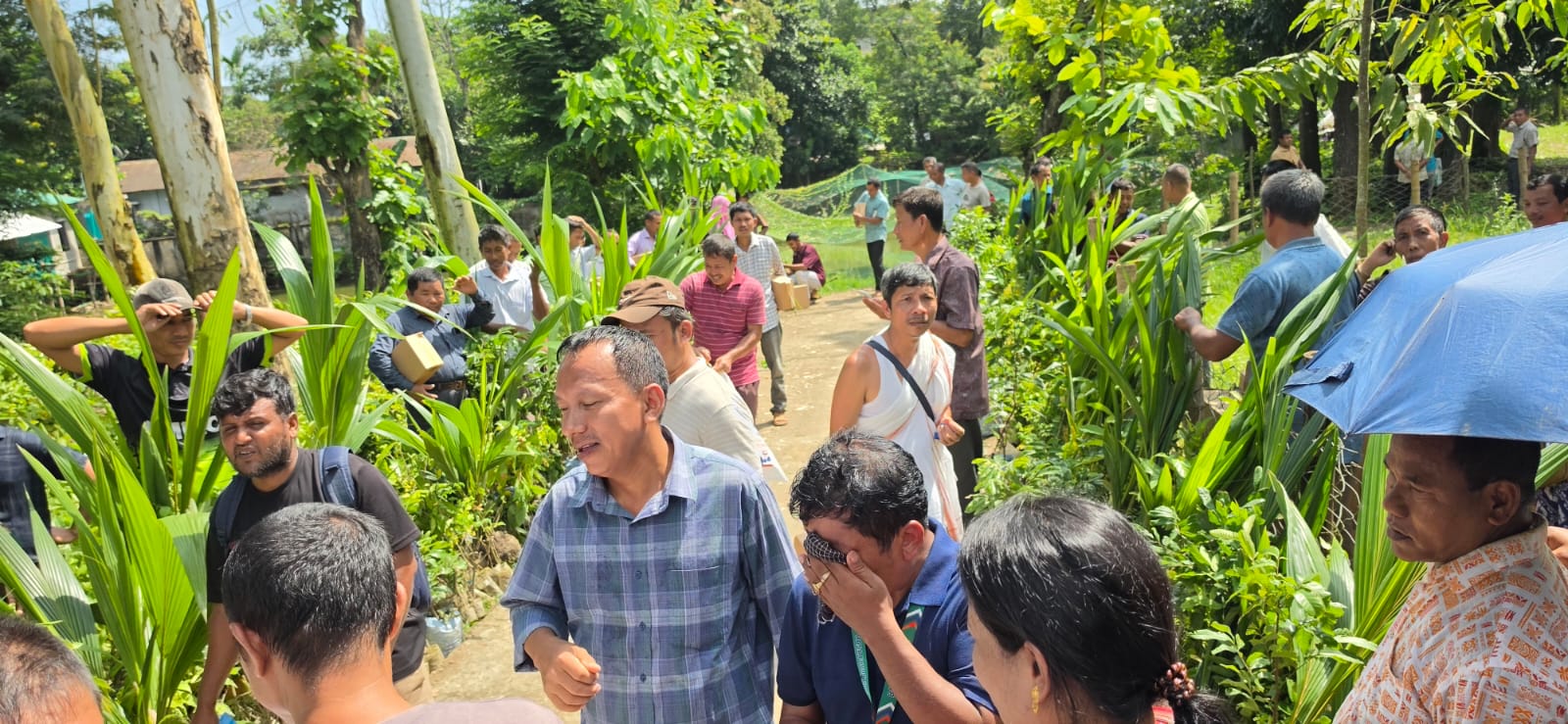
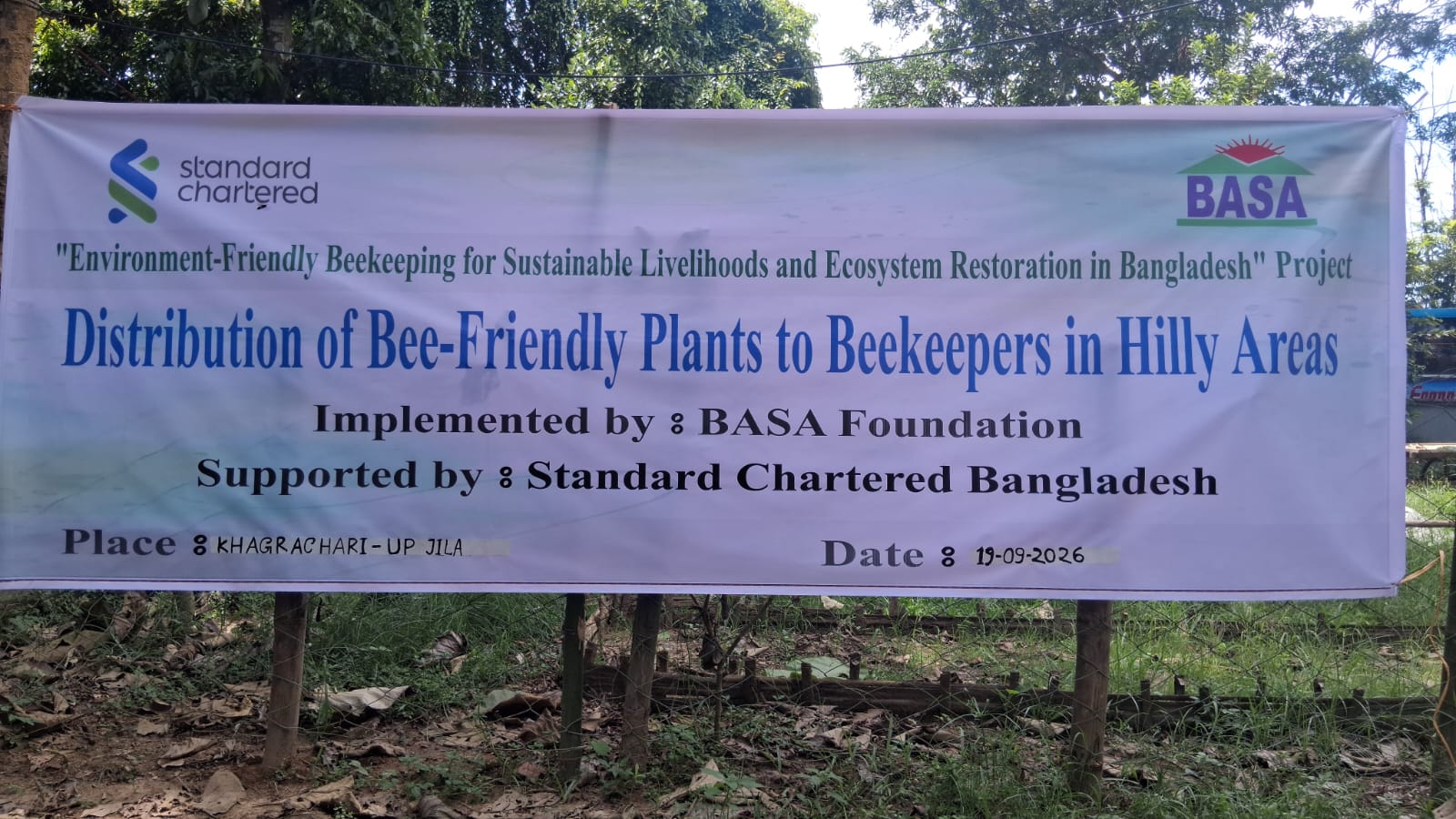
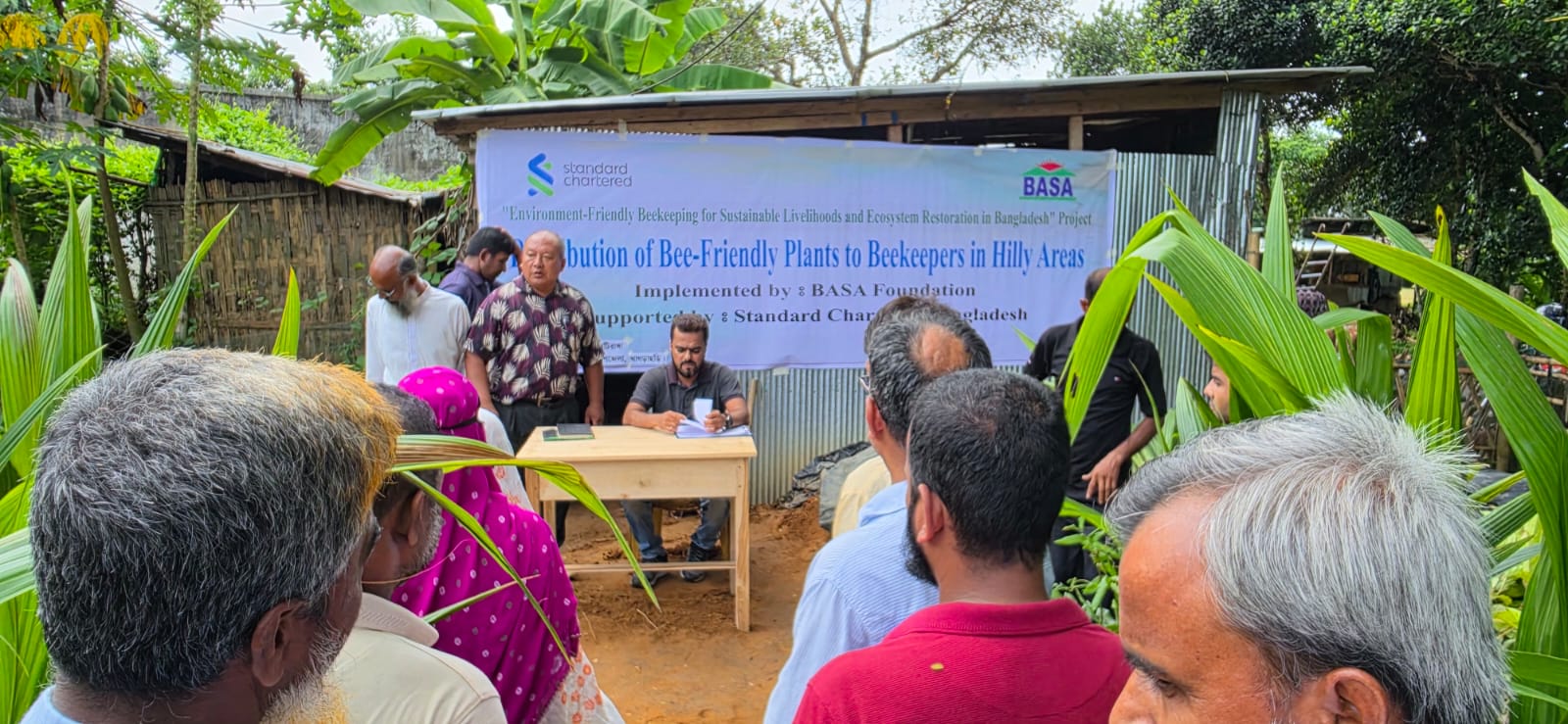
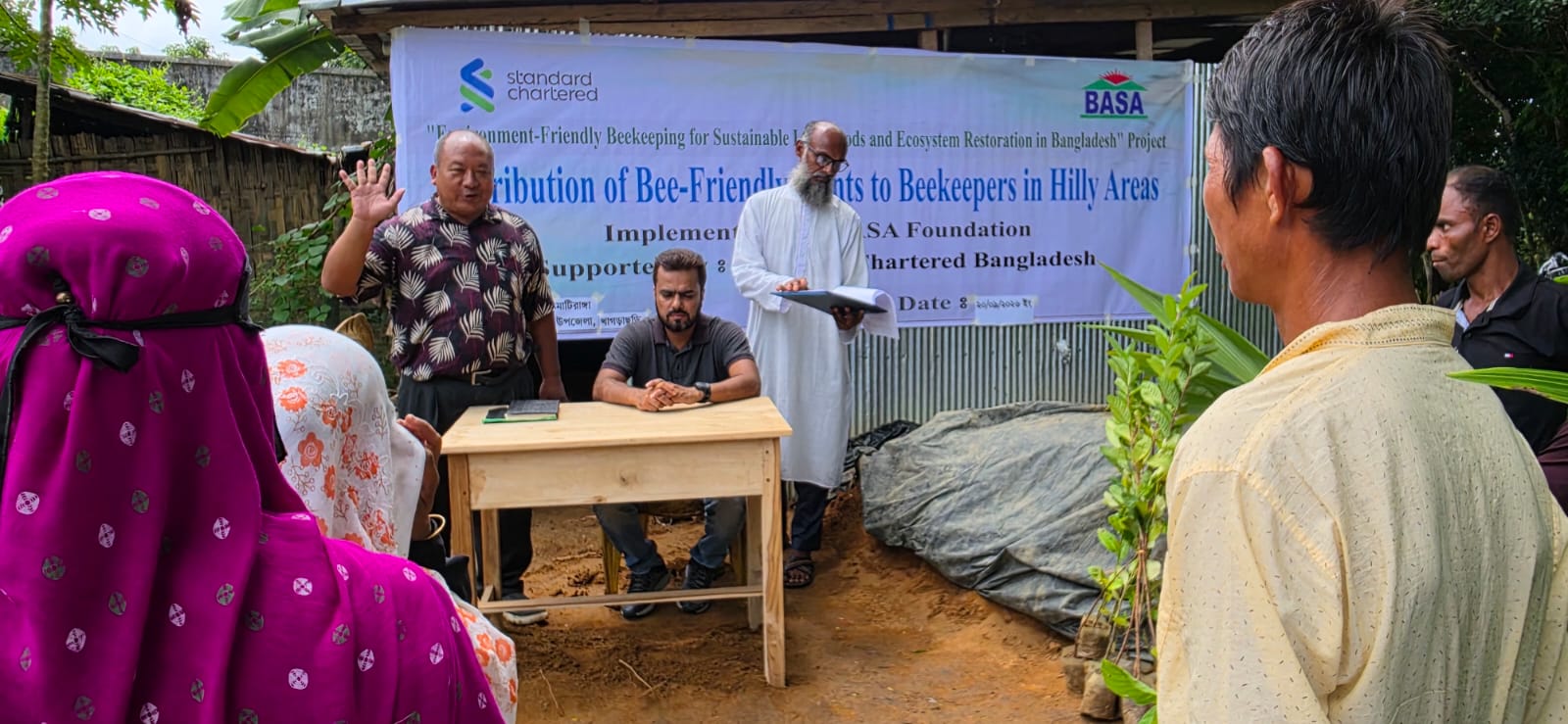
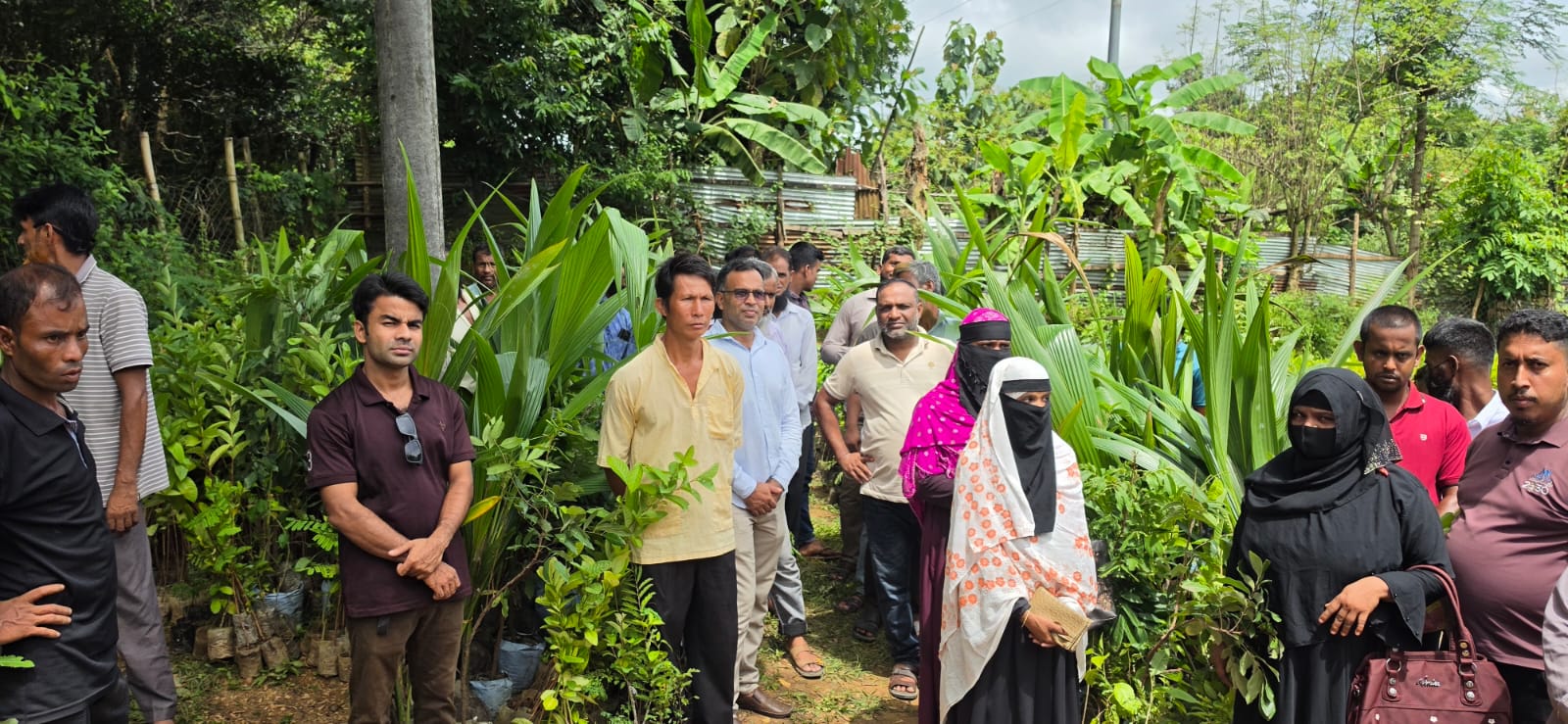
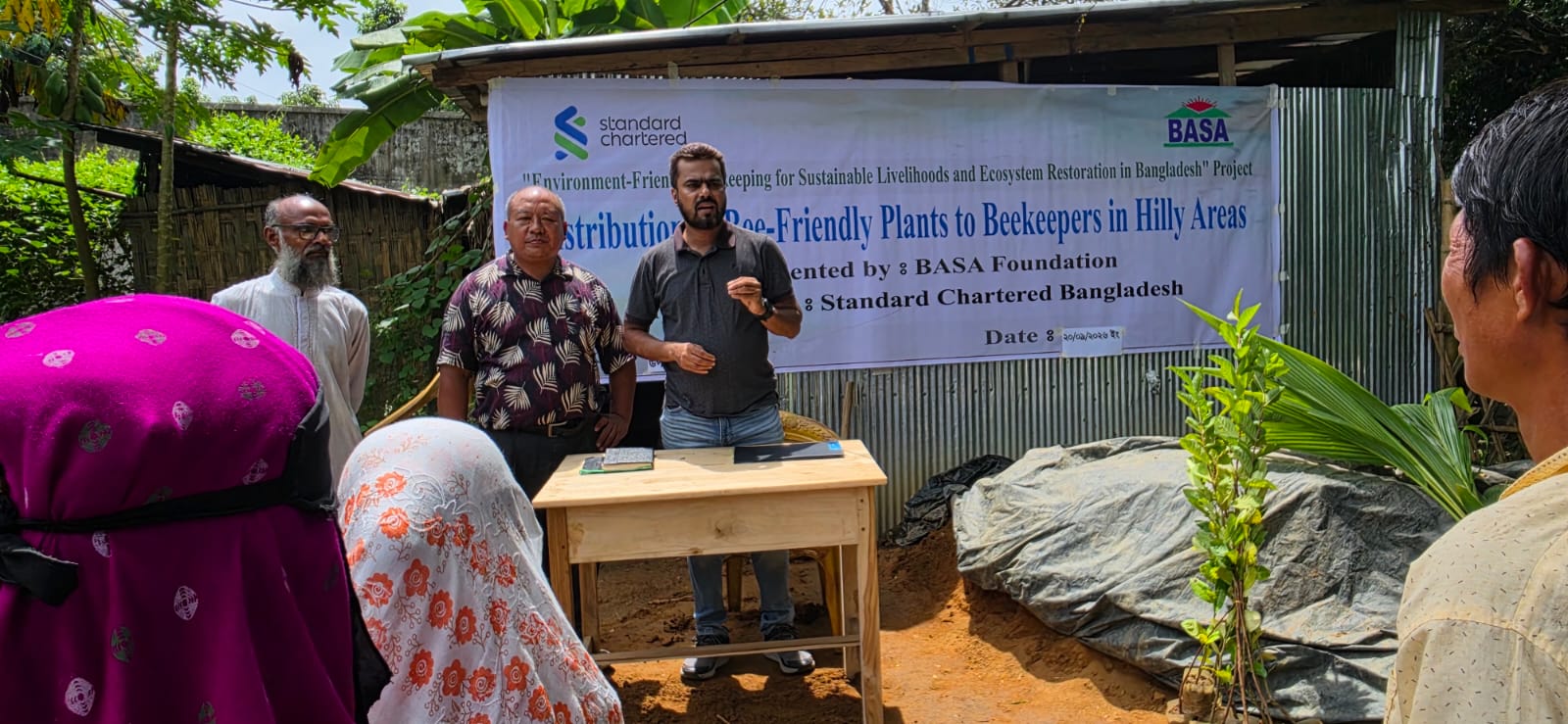
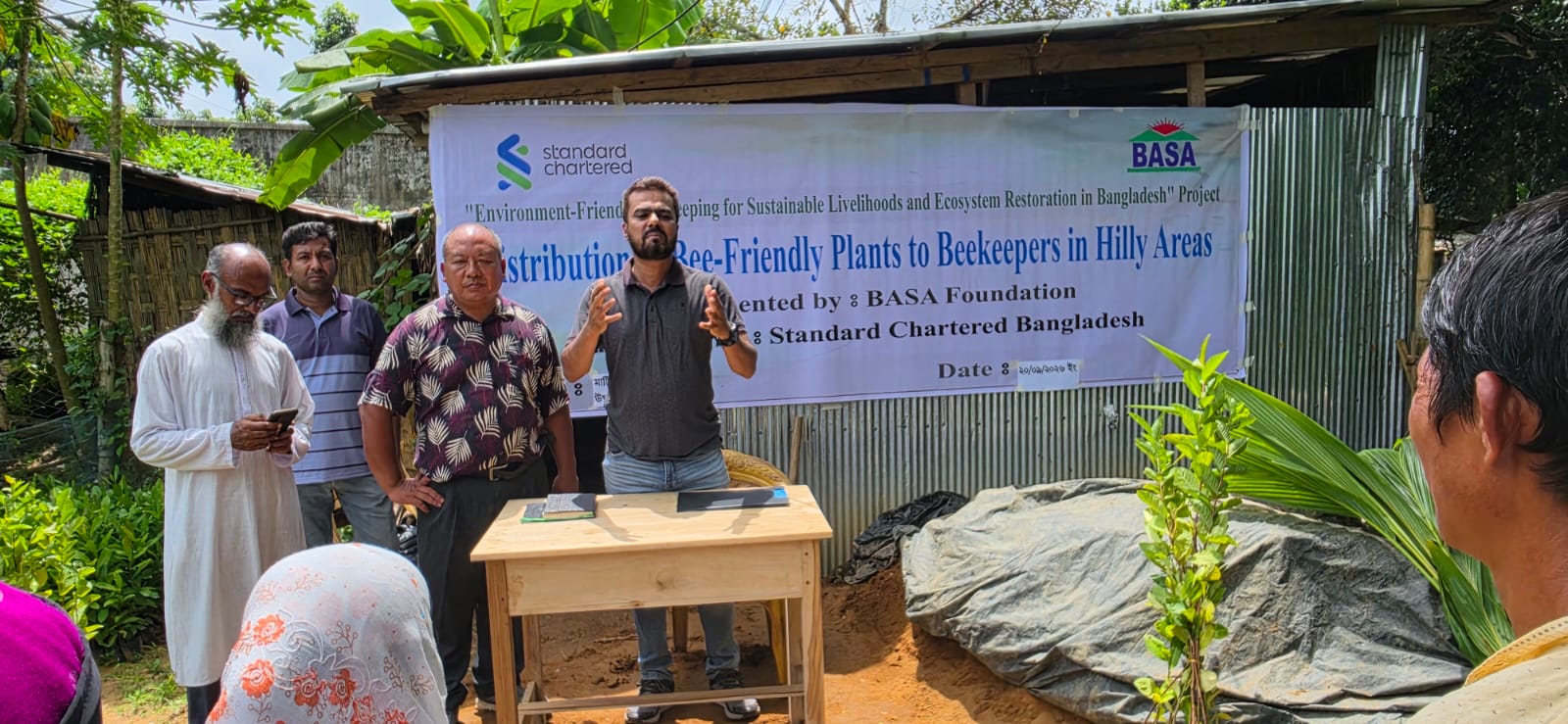
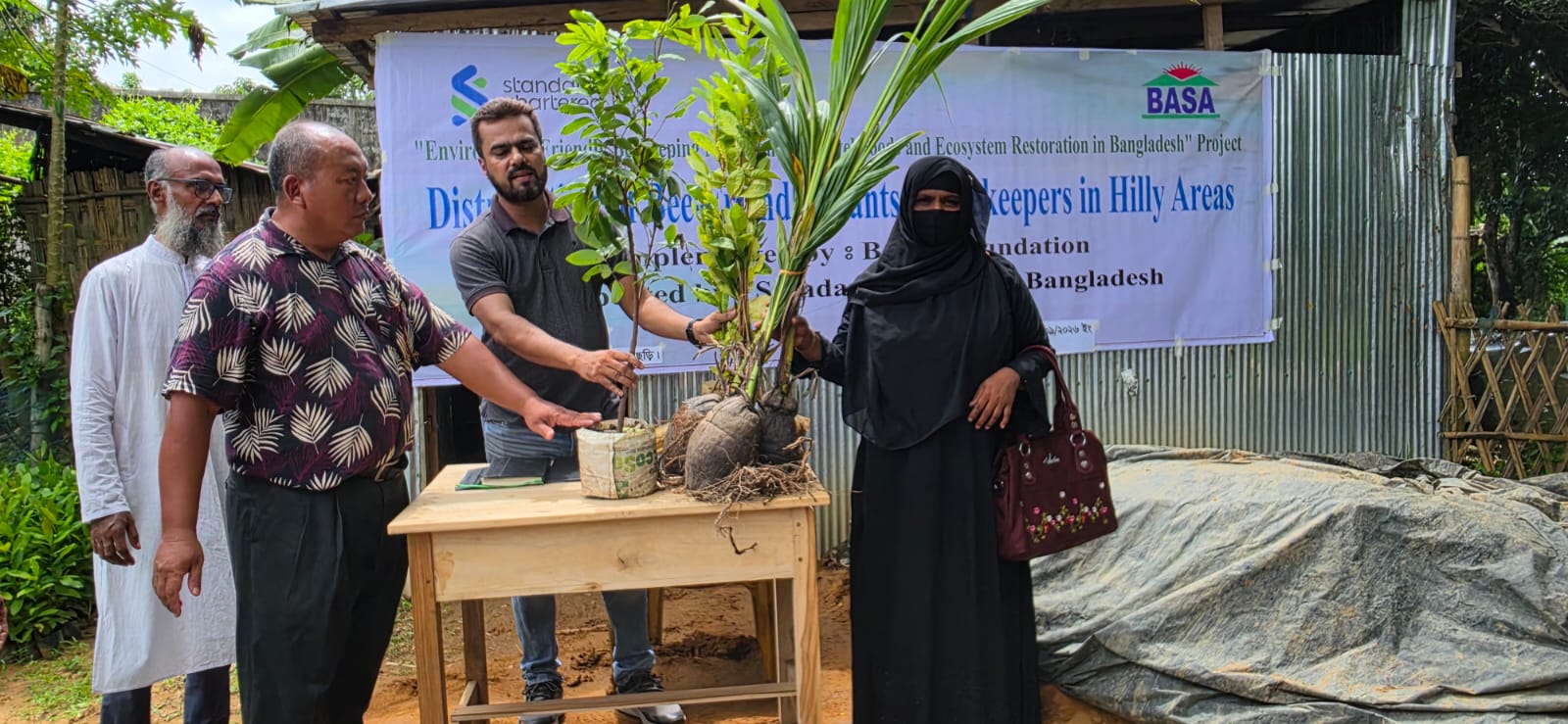
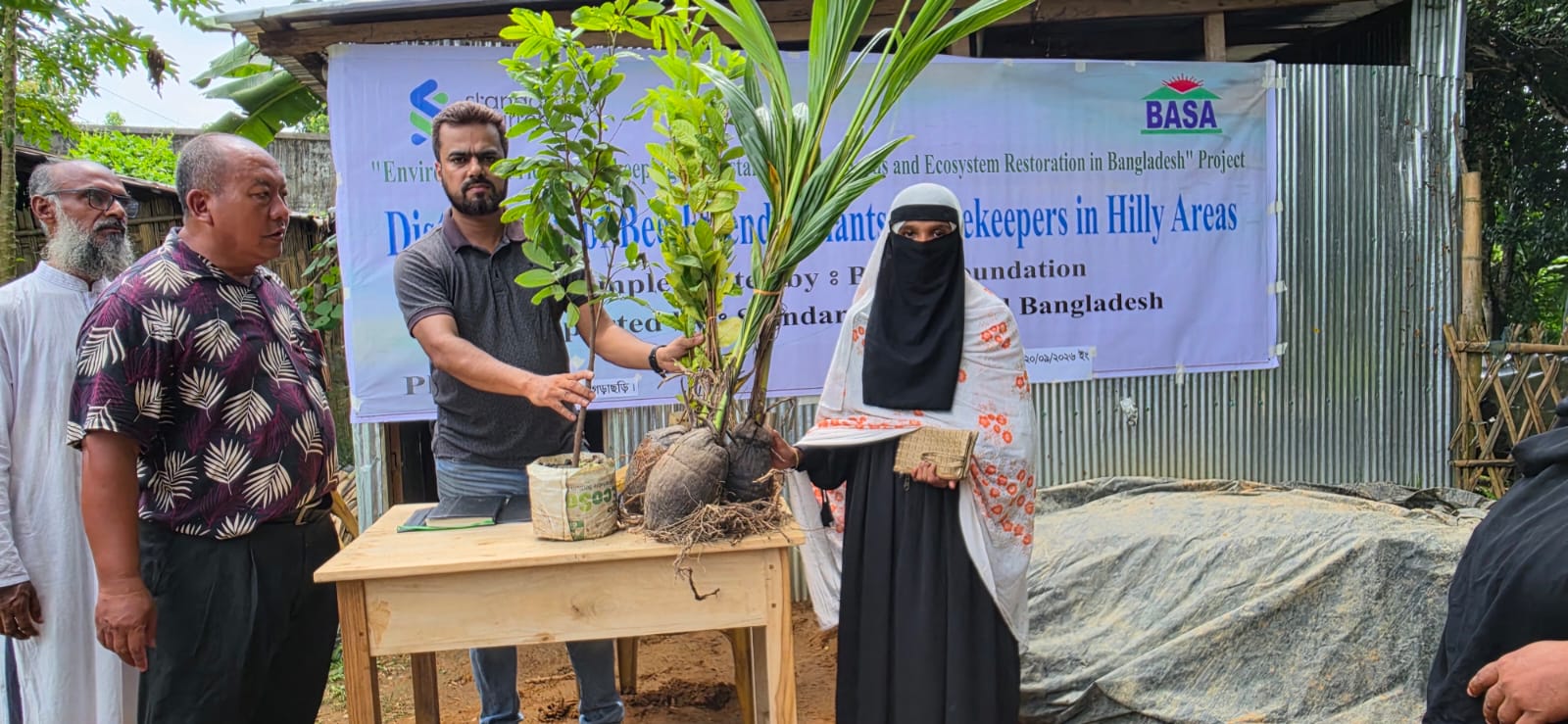
Supporting Honeybees, Strengthening Livelihoods and Restoring EcosystemsTo address the seasonal shortage of floral resources for honeybees and support sustainable beekeeping, BASA Foundation has initiated the distribution of bee-friendly and fruit-bearing plant saplings among beekeepers.As the first phase of this initiative, 125 beekeepers in Khagrachhari Sadar Upazila have received flowering and fruit-bearing plant saplings that can provide valuable forage for honeybees during the dearth season.The initiative is being implemented under the project “Environment-Friendly Beekeeping for Sustainable Livelihoods and Ecosystem Restoration in Bangladesh”, with support from Standard Chartered Bank.